




What is a Conjunction?
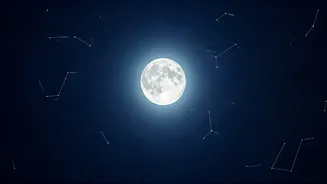
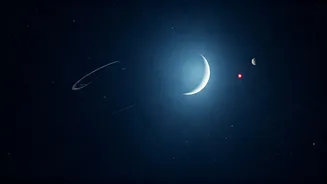
A planetary conjunction is not some dramatic cosmic collision. It is simply an illusion of perspective. From our viewpoint here on Earth, two celestial bodies—like the Moon and a planet—appear to be very close together because they happen to line up in our line of sight.
Though they may look like neighbours for a night, in reality, they are separated by hundreds of millions of kilometres. These celestial alignments are some of the most beautiful and easily observed events for any sky-watcher, requiring no special equipment, just a clear sky and the knowledge of when to look.
Early July: A Graceful Dance with Saturn
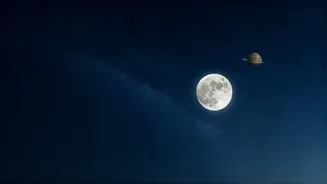
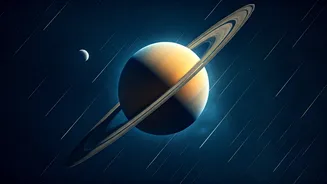
Your first appointment is in early July. On the night of July 7 and into the pre-dawn hours of July 8, 2026, the Moon will have a close encounter with Saturn. You will find the pair in the eastern sky after midnight, with the ringed planet appearing as a steady, golden-white point of light near the Moon. Unlike stars, planets tend not to twinkle, which can help you identify it. While the pairing is lovely to the naked eye, binoculars will make Saturn appear even brighter. The event is a quiet, simple, and genuinely beautiful sight.
Mid-July: A Crescent Moon Meets Mars
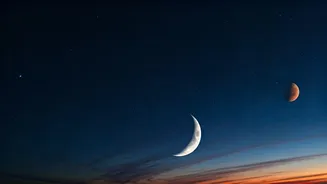
Mark your calendars for July 10 and 11. In the hours before sunrise, a beautiful crescent Moon will appear alongside the reddish glow of Mars. This stunning pairing will be visible in the eastern sky, and as an added bonus, the famous Pleiades star cluster, also known as the Seven Sisters, will join the celestial gathering. Mars will be easily visible to the naked eye as a bright, reddish object, making this a particularly photogenic and memorable pre-dawn event for early risers.
Late July: A Brief Date with Venus
Towards the end of the month, on July 17, the show moves to the evening sky. Shortly after sunset, look to the west to catch a slim crescent Moon paired with the brilliant planet Venus. This will be a brief but dazzling sight. Venus is unmistakably bright, so you will not have trouble spotting it, even from a city with some light pollution. Be sure to look relatively soon after the sun goes down, as the pair will not stay above the horizon for very long.
How to Best Enjoy the Show
You do not need to be a professional astronomer to enjoy these events. In fact, no telescope is necessary, though binoculars can certainly enhance the view. The most important thing is to find a viewing spot with a clear view of the horizon, away from the direct glare of city lights if possible. Give your eyes about 20 to 30 minutes to fully adjust to the darkness; this will allow you to see much more. For help locating planets and constellations, there are many excellent and user-friendly stargazing apps available for smartphones, such as SkyView or Stellarium Mobile. These apps use your phone’s location to show you a real-time map of the sky above you.