






What Makes These Solar Sheets Different?
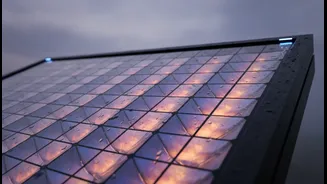
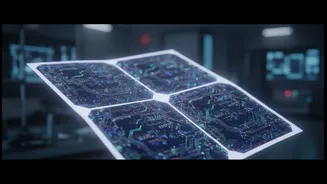
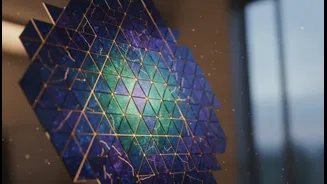
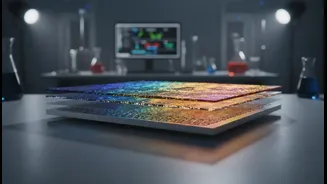
Unlike traditional solar panels made from thick, rigid silicon wafers, these next-generation solar solutions are fundamentally different. They are often built using materials like perovskites or carbon-based organic compounds. These materials can be processed
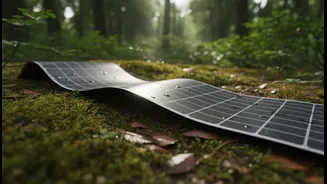
into ultra-thin, lightweight films, sometimes through printing-like techniques. Instead of being protected by heavy glass, they are encased in durable, pliable polymers. The result is a solar sheet that is not only a fraction of the weight of a conventional panel but can also be bent, rolled, and applied to curved or unconventional surfaces where rigid panels would be impractical. This opens up a world of possibilities for integrating solar power into our environment in entirely new ways.
The Low-Light Advantage
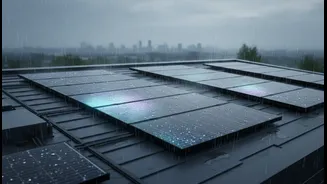
The most significant promise of these new materials is their enhanced performance in less-than-ideal weather. While conventional panels work on cloudy days, their output can drop to 10-25% of their rated capacity. Emerging technologies, particularly those using perovskite crystals, are engineered to be more efficient at capturing diffuse and low-intensity light. Perovskites can absorb a wider spectrum of light than traditional silicon. This means they can maintain higher relative efficiency on overcast days, in the early morning, or late in the afternoon, maximizing energy generation throughout the day. Some studies show these materials can achieve impressive efficiency even under indoor lighting, highlighting their sensitivity to a broad range of light conditions.
Beyond the Rooftop: A New Canvas for Clean Energy
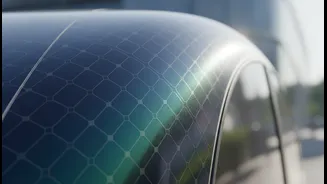
The combination of flexibility and low weight unlocks applications far beyond traditional rooftop installations. Because they don't require heavy mounting racks and can often be glued directly onto surfaces, these sheets are ideal for structures that cannot support heavy loads. Imagine solar-powered industrial warehouses with curved roofs, awnings on commercial buildings, or even temporary disaster relief shelters generating their own power. The technology is also being explored for integration into vehicles like trucks and boats, backpacks for hikers, and even embedded into clothing to power wearable devices. For architects and designers, it offers the chance to seamlessly weave solar generation into building facades and other features without compromising aesthetics.
Relevance for India's Energy Goals
For a country as geographically diverse as India, with ambitious renewable energy targets, this technology holds significant potential. During monsoon season, many parts of the country experience prolonged cloudy conditions. Solar solutions that perform better in low light could help stabilize energy generation year-round. In densely packed cities, building facades and other vertical surfaces offer vast, untapped real estate for power generation. Furthermore, the lightweight and portable nature of these panels could be a game-changer for providing power to remote, off-grid communities where transporting and installing heavy equipment is a major challenge. It offers a path toward more decentralized and resilient energy infrastructure, tailored to local needs.
Hurdles on the Horizon
Despite the immense promise, flexible solar technologies still face significant challenges before widespread adoption. One of the main hurdles is long-term durability and stability. Early versions of these materials could degrade when exposed to moisture and heat, though recent advancements have made significant strides in improving their resilience. Efficiency is another area of focus. While lab tests for perovskite-silicon tandem cells have shown remarkable results, sometimes exceeding conventional panels, the efficiency of purely flexible commercial modules is often still lower than their rigid counterparts. Finally, scaling up manufacturing to produce large, stable, and cost-effective sheets remains a key objective for researchers and companies in the field.