




Our Sun, The Ultimate Blind Spot
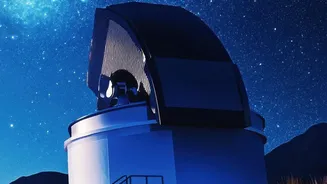
Most asteroid hunting happens at night. Ground-based telescopes scan the dark sky, looking for faint points of light moving against the backdrop of stars. This method works well for objects in orbits beyond Earth. However, it creates a major problem for asteroids
that approach from the inner solar system, towards the sun. Trying to spot a small, dark rock against the immense glare of our star is like trying to see a speck of dust in front of a powerful searchlight. The sun’s overwhelming brightness completely obscures them. This means that an asteroid could be heading directly towards Earth from the daytime sky and remain essentially invisible to our primary detection methods until it enters our atmosphere.
The Chelyabinsk Wake-Up Call
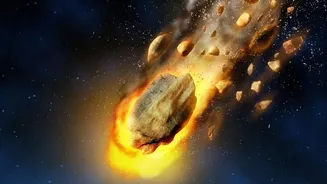
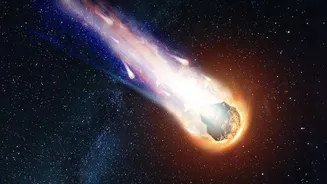
This isn't just a theoretical problem. On February 15, 2013, a roughly 20-metre-wide asteroid exploded over Chelyabinsk, Russia. The blast, estimated to be 30 times more powerful than the Hiroshima bomb, shattered windows in thousands of buildings and injured over 1,500 people, mostly from flying glass. No observatory saw it coming. The reason was simple: it had approached directly from the direction of the sun, hidden in the morning glare. The Chelyabinsk event was a stark reminder that even relatively small asteroids can cause significant ground damage and that our planet has a critical vulnerability in its detection network.
Size, Shape, and Stealth
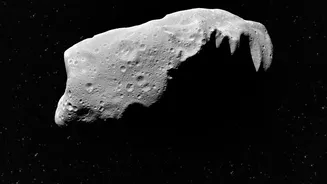
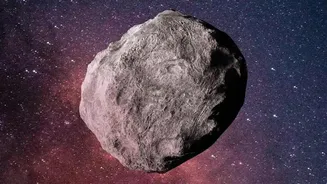
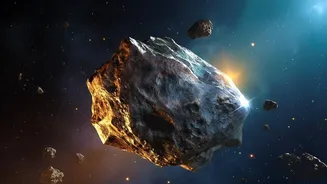
Beyond the sun's glare, the physical characteristics of an asteroid play a huge role in its detectability. The most obvious factor is size; smaller asteroids are simply fainter and harder to spot. An object the size of a bus is nearly impossible to see from millions of kilometres away. But it's not just about size. The asteroid's composition and reflectivity, known as albedo, are also critical. Some asteroids are made of bright, reflective silicate rock, making them easier to see. Others are as dark as charcoal, absorbing most of the sunlight that hits them. A large, dark asteroid can be harder to detect than a smaller, brighter one. The speed and trajectory of the rock also matter. Fast-moving objects that cross our observation fields quickly can be missed, and those with unusual orbits might not appear where astronomers are typically looking.
A New Generation of Sentinels
Recognising these blind spots, space agencies are developing new ways to hunt for hidden asteroids. The most promising solution is to place a telescope in space where the sun's glare is no longer an issue. NASA's upcoming Near-Earth Object (NEO) Surveyor is a space-based infrared telescope specifically designed for this task. Scheduled for launch by 2028, NEO Surveyor will orbit at the L1 Lagrange point, a gravitationally stable spot between the Earth and the sun. From this vantage point, it can look 'outward' to spot asteroids coming from the sun's direction that are invisible from Earth. Instead of looking for faint reflected sunlight, it will detect the heat signature that asteroids emit after being warmed by the sun. This allows it to find even the very dark asteroids that optical telescopes often miss. The goal for NEO Surveyor is to find at least 90% of near-Earth objects larger than 140 metres in diameter — big enough to destroy a city — and significantly improve our catalogue of smaller but still dangerous rocks.