





The Anatomy of a Last-Minute Disaster
You’ve spent hours building layers of flavour. The aromas have filled your kitchen, and you’re just moments from serving. You take one last taste and think, “It just needs a little something.” This is the most dangerous moment in cooking. Adding seasonings
directly to a large pot of nearly finished food is a high-stakes gamble. Why? Because flavours need time to dissolve and meld. A pinch of salt or a splash of vinegar can taste muted at first, tricking you into adding more and more until, suddenly, you’ve gone too far. Many spices also bloom over time, meaning their intensity will grow as they sit in the hot liquid. What tastes perfectly seasoned one moment can become overpowering five minutes later.
The 'Test Bowl' Technique Explained
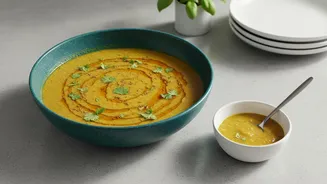
This is where the wisdom of professional chefs can save your meal. Instead of seasoning the whole pot, you season a single spoonful. The process is simple: ladle a small amount of your soup, stew, or sauce into a separate small bowl or spoon. Add a tiny amount of your chosen seasoning—a few grains of salt, a drop of lemon juice, a speck of chilli powder—to this small portion. Stir it in completely and then taste. This isolated sample gives you a surprisingly accurate preview of how the main dish will taste once the ingredient is fully incorporated. If it’s perfect, you can confidently add a proportionate amount to the main pot. If it’s still missing something, you can continue to adjust the test portion without any risk to your main dish.
Why This Method Works So Well
The test bowl method works because it’s a low-risk environment for experimentation. It takes the guesswork out of seasoning and replaces it with controlled, repeatable steps. You can safely discover that a dish needs much less salt than you thought, or that a dash of vinegar is the key to brightening all the other flavours, without corrupting the entire batch. This technique is about more than just avoiding mistakes; it’s about learning to season with confidence. By tasting and adjusting in small increments, you begin to train your palate to recognize what a dish needs. You learn to identify when something is flat and needs salt, when it's dull and needs acid, or when it's heavy and needs a touch of sweetness to create balance.
Beyond Salt: A Universal Approach
This principle isn’t just for salt. It’s essential for any potent ingredient you add near the end of cooking. Think of it as a final quality control check. Wondering if your curry needs more garam masala? Test it in a spoonful. Unsure if a squeeze of lime will make your soup too sour? Try it on a small scale first. This is especially crucial for powerful flavours like hot sauce, fish sauce, Worcestershire sauce, potent herbs like rosemary, or rich additions like cream and butter. All of these can dramatically alter the final profile of a dish, and once they're in, they’re almost impossible to take out. The test bowl gives you the freedom to be bold and creative without the fear of a point-of-no-return error.
What to Do If You've Already Gone Too Far
Even with the best intentions, over-seasoning can happen. If you find yourself with a dish that's too salty, don't despair. Your first line of defence is dilution. You can add more of the main liquid, like water or unsalted broth, to spread out the saltiness. For soups and stews, adding a starchy ingredient like a raw, diced potato can help absorb some of the excess salt as it cooks. Another effective strategy is to balance the flavour. A dash of acidity from lemon juice or vinegar, or a touch of sweetness from sugar or honey, can help counteract and mask the overwhelming saltiness by giving your taste buds something else to focus on. Adding fat, like cream or coconut milk, can also mellow out harsh flavours.