


The Power of a Single Focal Point
When you walk into a room, your eye naturally seeks an anchor—a place to land. In a small space filled with multiple small frames, various decorative objects, and busy patterns, the eye has nowhere to rest. This visual fragmentation can make a room feel
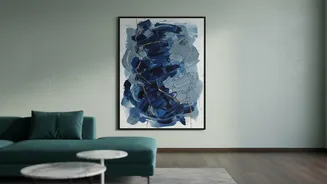
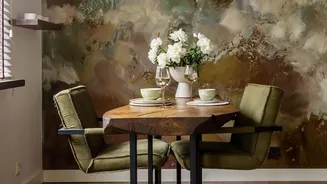
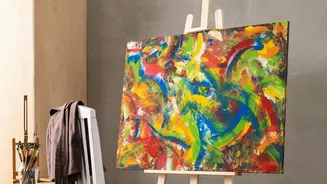
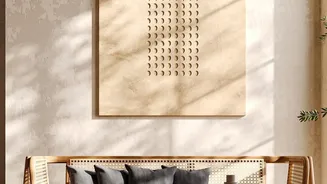
chaotic and even smaller than it is. By contrast, a single, large-scale artwork creates an immediate and powerful focal point. It commands attention, giving the room a clear sense of purpose and hierarchy. This one bold move simplifies the visual landscape, reducing clutter and allowing the room to feel more organized and intentional. Your brain registers the cohesive, singular statement rather than a dozen competing distractions.
Choosing Your Statement Piece
The key to success is selecting the right piece, and size is paramount. A common rule of thumb is to choose art that fills about two-thirds of the width of the furniture it hangs above, like a sofa or headboard. This creates a sense of balance rather than overwhelming the space. The subject matter also plays a role. Landscapes with distant horizons or abstract pieces with a sense of depth can trick the eye, making a wall feel more expansive. When it comes to color, a piece that pulls in tones from your existing decor—rugs, cushions, or other accents—can tie the entire room together, creating that sought-after coherence. However, a high-contrast piece can also be effective, acting as a deliberate and energizing anchor.
Strategic Placement for Maximum Impact
Where you hang your art is just as important as what you hang. The standard gallery practice is to position the center of the artwork at eye level, which is typically about 145-150cm from the floor. This ensures the art connects with the viewer and feels integrated into the room. When placing art above furniture, leave a gap of about 15-20cm between the bottom of the frame and the top of the sofa or console table. This small bit of breathing room prevents the composition from feeling cramped. In rooms with low ceilings, opting for a vertically oriented piece can draw the eye upward, creating an illusion of height. Conversely, a wide, horizontal canvas can make a narrow room feel broader.
Let the Artwork Breathe
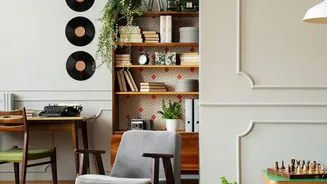
Once you have your statement piece in place, the final step is to edit the surrounding space. For a large artwork to truly shine, it needs negative space around it. This doesn't mean your room must be minimalist, but it does mean the wall featuring your art should remain relatively uncluttered. Allow the artwork to be the hero by simplifying the decor on adjacent surfaces. Instead of a gallery wall, which can sometimes feel busy in a small area, let one powerful piece do all the talking. This approach reinforces the sense of order and calm, allowing the room to feel both styled and spacious. By giving your art visual breathing room, you enhance its power to make the entire space feel more complete and harmonious.