
What Exactly is Friselle?
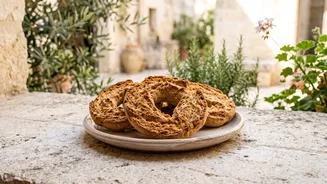
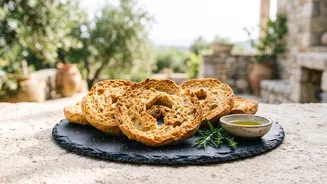
At first glance, a frisella (the singular of friselle) looks like a rustic, rock-hard, bagel-shaped rusk. Made from simple ingredients like durum wheat or barley flour, water, yeast, and salt, it’s a staple of 'cucina povera', or peasant cooking, from Italy’s
southern regions, particularly Puglia. It has a distinctive texture: one side is smooth and hard from its initial baking, while the other side, which is exposed after being split in half, is porous and rough, perfectly designed to soak up liquids. Don’t be mistaken, this isn’t a bread you can bite into directly from the bag; its jaw-breaking hardness is the very key to its incredible longevity.
The Secret to Its Long Shelf Life
The magic behind friselle’s impressive lifespan lies in a process known as 'biscottatura', or double-baking. First, the ring-shaped dough is baked until cooked through. Then, while still warm, it's sliced horizontally and returned to a low-temperature oven for a second, much longer bake. This second step painstakingly draws out nearly all the moisture, which is what would typically cause bread to mold and spoil. The result is a completely dehydrated product that, when stored correctly in an airtight container away from humidity, can last for many months—some bakers even say up to a year. This made it an invaluable food source for sailors, farmers, and even crusaders on long journeys who needed sustenance that wouldn't perish.
A Taste of Italian History
Friselle aren't just a food item; they are a piece of history. Their origins are ancient, with similar twice-baked breads appearing across the Mediterranean, from the Greek 'paximadi' to the Roman 'panis nauticus'. In Southern Italy, they became the perfect solution for people who spent long periods away from home, like fishermen at sea or shepherds in remote fields. The hole in the middle wasn't just for looks; it was a practical feature that allowed sailors to string them onto a rope, keeping them organized and dry onboard ships. For centuries, friselle made from barley were the everyday bread of the poor, while those made from more expensive durum wheat were reserved for wealthier families and special occasions.
How to Eat This 'Rock-Hard' Bread
Eating a frisella involves a delightful ritual known as 'sponzatura', which means 'to wet' or 'to soak'. You must first rehydrate the bread by briefly dipping it in a bowl of cold water for just a few seconds. The goal is to soften the porous interior just enough to be edible while the base remains satisfyingly crisp. Over-soak it, and you’ll have a mushy mess. In the past, sailors would simply dip them in clean sea water. Once softened, the classic preparation is beautifully simple: the frisella is rubbed with a clove of garlic, topped with chopped ripe tomatoes, sprinkled with oregano and salt, and finished with a generous drizzle of high-quality extra virgin olive oil. This classic topping transforms the humble bread into a dish that captures the essence of a Puglian summer.
Friselle in the Modern Kitchen
While the classic tomato topping remains a favourite, the versatility of friselle makes them a fantastic staple for any modern pantry. Think of them as a robust alternative to bruschetta or a sturdier cracker. They can be topped with anything from mozzarella and anchovies to creamy avocado or spicy 'nduja sausage. Some people crumble them into salads, similar to a Panzanella, or serve them alongside hearty soups and stews. You can even go sweet by topping a softened frisella with ricotta cheese and a drizzle of honey. Their ability to be stored for long periods makes them a reliable and resourceful ingredient to have on hand for a quick, delicious, and satisfying meal.