






The Big Bang: A Policy Shift Ignites an Industry
For decades, India’s space ambitions were championed almost exclusively by the Indian Space Research Organisation (ISRO). But a landmark policy shift in 2020 opened the sector to private enterprise, creating a 'Big Bang' moment for homegrown startups.
The establishment of IN-SPACe (Indian National Space Promotion and Authorisation Centre) as a single-window agency to facilitate private participation has been a game-changer. This move has catalysed a surge in entrepreneurship, with the number of space startups growing from just a handful to over 400 by early 2026. This burgeoning ecosystem is projected to expand India's share of the global space economy from 2-3% to over 8%, with the domestic market forecast to reach nearly $45 billion within the next decade.
The Downstream Deluge: Turning Space Data into Earthly Solutions
The most significant expansion in career opportunities is happening in the 'downstream' sector, which focuses on using satellite data to build applications for terrestrial industries. Companies like Pixxel, which specialises in hyperspectral satellite imagery, are enabling revolutions in sectors far removed from space. Their data helps create solutions for precision agriculture, allowing farmers to monitor crop health and optimise resource use. It also aids in urban planning, environmental monitoring, and disaster management. This creates a massive demand for data scientists, geospatial analysts, remote sensing specialists, and machine learning engineers who can translate raw satellite data into actionable business intelligence. These roles require skills in Python, AI frameworks, and big data technologies, making the space industry a new frontier for tech professionals.
Beyond the Launchpad: Roles in Hardware and Systems
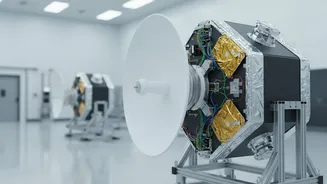
While data is a huge part of the story, the 'upstream' sector—building the hardware that goes into space—is also booming and diversifying. Startups like Skyroot Aerospace, builders of the Vikram-1 rocket, and Agnikul Cosmos, known for its 3D-printed engines, are at the forefront of this wave. This has created a hiring surge not just for aerospace engineers, but for professionals in mechanical engineering, electronics, avionics, robotics, and materials science. These companies are competing to make space access cheaper and more frequent, driving innovation in manufacturing and propulsion. The growth is attracting seasoned engineers from ISRO and global tech firms, creating a dynamic environment where government experience meets startup agility.
The Ecosystem Builders: Finance, Law, and Management
A thriving industry needs more than just engineers and scientists. As hundreds of startups attract significant venture capital—with investments crossing $500 million—a new demand has emerged for professionals who can build the business infrastructure. Finance experts with experience in deep-tech funding are needed to navigate complex investment rounds. Lawyers specialising in the nascent field of space law and regulatory compliance are becoming indispensable as companies navigate domestic and international rules. Furthermore, roles in business development, marketing, project management, and human resources are crucial for scaling these startups from innovative concepts into commercially viable enterprises. These positions make the space sector accessible to talented individuals from management, legal, and social science backgrounds.