

Master the STEM Fundamentals
The journey to space still begins on the ground with a strong academic foundation. A high school education with a focus on Physics, Chemistry, and Mathematics (PCM) is the essential first step for almost any technical role in the space industry. These
subjects provide the core principles for everything from orbital mechanics to material science. For higher education, a Bachelor's degree (B.E. or B.Tech) in fields like Mechanical, Aerospace, Electronics and Communication, or Electrical Engineering remains the most direct path into organisations like ISRO and private aerospace companies. ISRO often requires a minimum of 65% aggregate marks for its engineering roles, so consistent academic excellence is key.
Embrace the Digital Frontier: Code and Data
The next generation of space technology is as much about software as it is about hardware. Proficiency in programming languages like Python, C++, and MATLAB is no longer optional; it's essential for simulation, data processing, and mission control. More importantly, with satellite constellations generating terabytes of data, the industry is seeing a massive demand for specialists in Artificial Intelligence (AI), Machine Learning (ML), and Big Data analytics. These skills are used to interpret satellite imagery for agriculture, track climate change, and enable autonomous navigation—turning raw data into actionable intelligence.
Get Your Hands Dirty with Practical Projects
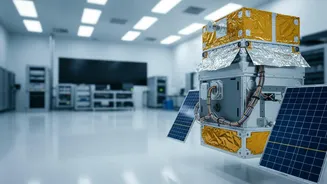
A degree alone is not enough to stand out. The Indian space sector, including both ISRO and private firms like Skyroot Aerospace and Agnikul Cosmos, highly values hands-on experience. Students should actively seek opportunities to apply their theoretical knowledge. This can involve participating in college robotics clubs, joining a student satellite (CubeSat) project, competing in rocketry competitions, or securing internships. These projects demonstrate problem-solving skills, teamwork, and a genuine passion for the field, making your resume far more compelling than one listing only coursework.
Explore Specialised and Emerging Fields
India's space programme is rapidly diversifying. Ambitious projects like the Gaganyaan human spaceflight mission and the Bharatiya Antariksh Station require a new range of specialists. This opens doors for those with advanced degrees (M.Tech or PhD) in niche areas like astrophysics, remote sensing, and robotics. Furthermore, as the sector commercialises, there's a growing need for experts in non-engineering domains. This includes space law and policy to navigate international treaties, business management for the burgeoning startups, and even bio-astronautics to study the effects of space on the human body.
Develop Essential Soft Skills
Space missions are incredibly complex, long-term projects that involve large, multidisciplinary teams. Technical brilliance must be paired with strong soft skills. The ability to communicate complex ideas clearly, collaborate effectively with engineers and scientists from different backgrounds, and demonstrate resilience under pressure are critical attributes. Whether you are troubleshooting a component failure minutes before a launch or co-authoring a research paper, your ability to work well with others is just as important as your technical knowledge.
Stay Plugged into the Ecosystem
The pace of change in India's space sector is rapid. To stay relevant, it is crucial to follow the developments at both ISRO and the fast-growing private sector. Keep track of announcements from IN-SPACe, the agency created to facilitate private participation. Follow the milestones of leading startups like Pixxel (satellite imagery), Skyroot Aerospace (launch vehicles), and Dhruva Space (satellite solutions). This awareness not only helps in identifying career opportunities but also in understanding the evolving technological trends, from electric propulsion systems to next-generation satellite communications, that will define the industry's future.