





Not Just a Religious Affair
For generations, chariot processions, or Rath Yatras, were primarily seen as sacred journeys for the devout. Events like the Puri Jagannath Rath Yatra, one of the world's oldest and largest, have drawn millions of believers who come to pull the colossal
chariots and seek divine blessings. The journey was the destination, and faith was the primary passport. But in recent years, a significant shift has been taking place. Alongside families and elderly pilgrims, you’ll now find solo backpackers, groups of friends in their twenties, and digital nomads with DSLRs slung around their necks. They aren't necessarily there for religious salvation; they’re seeking a different kind of transcendence—a cultural and sensory immersion that a beach holiday simply cannot offer.
The Pull of the Spectacle
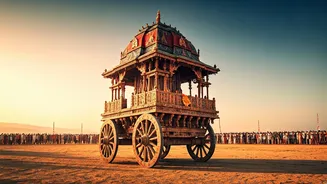
Let’s be honest: these events are made for the modern age of visual storytelling. Imagine three towering chariots, each over 40 feet high, hand-built and adorned with vibrant fabrics, moving through a tide of humanity. The sheer scale, colour, and energy are intoxicating. For a generation that communicates through images and videos, a Rath Yatra is a content goldmine. It offers an unparalleled opportunity to capture something epic, authentic, and steeped in a visual tradition that is thousands of years old. A perfectly filtered photo from a Goan café is one thing, but a video of a massive, hand-pulled chariot parting a sea of people? That’s experiential currency. The desire to document and share these larger-than-life moments on platforms like Instagram and YouTube is undeniably a powerful driver, turning ancient traditions into viral-worthy spectacles.
In Search of Authentic India
But to dismiss this trend as mere social media fodder would be a mistake. This movement is also rooted in a deeper search for authenticity. After years of curated, predictable, and often commercialised travel experiences, many young Indians are craving a connection to something real. They are turning away from manufactured fun and seeking out raw, unfiltered reality. A chariot procession is the antithesis of a sanitized tourist trap. It’s chaotic, overwhelming, loud, and deeply, unapologetically Indian. Participating, even as an observer, means engaging with a living history. It’s a chance to step out of the digital bubble and into a powerful current of collective human experience that has flowed for centuries. This quest for the ‘real’ is a defining characteristic of millennial and Gen Z travellers worldwide, and in India, it’s leading them straight to the heart of its most ancient traditions.
The Music Festival Vibe
There's another, more primal appeal: the energy of the crowd. Think of it as a spiritual music festival. In an era where many social interactions are mediated by screens, the physical experience of being part of a massive, unified group is incredibly compelling. The rhythmic chanting, the collective effort of pulling the ropes, and the shared sense of purpose create a powerful 'communitas'—a feeling of social unity and togetherness. For many young attendees, this collective effervescence is a major draw. It offers a sense of belonging and a shared emotional peak that is hard to find elsewhere. It’s a physical and emotional release, a chance to lose oneself in something far bigger than the individual.
A New Travel Ecosystem
This emerging trend has also been enabled by a new travel ecosystem. The rise of backpacker hostels in cities like Puri, detailed travel vlogs on YouTube offering practical tips (what to wear, where to stand, how to stay safe), and nimble travel startups curating 'cultural immersion' tours have made these once-daunting events more accessible. Information that was previously passed down through families is now available via a quick search. This infrastructure allows young travellers to navigate the logistics with confidence, turning a complex pilgrimage into an achievable adventure. They can experience the chaos on their own terms, blending the thrill of the ancient festival with the comfort of modern travel amenities.