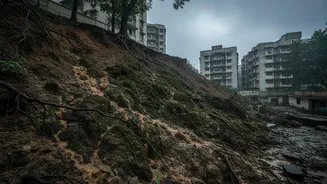









Why Mumbai is Vulnerable
Mumbai's unique geography, a mix of coastal plains and hilly terrain, makes it susceptible to landslides, especially during the monsoon. Intense or prolonged rainfall saturates the soil and weathered rock on slopes. When the ground can no longer absorb
more water, it loses stability, leading to the downhill movement of earth, rock, and debris. This risk is amplified in areas where construction, deforestation, or blocked drainage has altered the natural landscape, making many settlements on or near hillsides particularly vulnerable. According to the Brihanmumbai Municipal Corporation (BMC), there are hundreds of identified landslide-prone areas across the city.
Check Your Location's Official Risk
The first step is to know your area's history and official designation. The Geological Survey of India (GSI) and the BMC have identified and categorised numerous landslide-prone zones. These are often areas with a history of slope failure. Residents can inquire with their local BMC ward office to understand if their neighbourhood is on a list of vulnerable or highly vulnerable spots. Recent reports indicate that areas like Kurla, Ghatkopar, Bhandup, Vikhroli, and Chembur contain primary risk zones. While authorities issue notices to people in the most dangerous locations, awareness is the first line of defence for all residents in hilly terrain.
Visual Signs on Slopes and Ground
You don't need to be a geologist to spot signs of trouble. Pay close attention to the land around your property, especially during and after heavy rains. Look for new cracks appearing on the ground, pavements, or roads. Observe if trees, utility poles, or fences have started to tilt or lean. Another key indicator is the appearance of bulging ground at the base of a slope, which suggests the earth is being pushed from above. Bare spots on hillsides where vegetation has slid away or small slips of earth can be precursors to a larger event.
Changes Inside and Around Your Home
The stability of your home is directly linked to the ground it stands on. Signs of a potential landslide can often appear on the structure itself. Be alert for new cracks in plaster, tile, brickwork, or your building's foundation. If doors or windows suddenly begin to stick or jam for the first time, it could mean the frame is shifting due to ground movement. Similarly, if you notice outside walls, stairs, or walkways beginning to pull away from the main building, it is a significant red flag that the ground beneath is unstable.
Water and Unusual Sounds
Water is the most common trigger for landslides, and its behaviour can offer crucial clues. Be wary if you see water seeping or springing up in new locations on the ground, especially on a slope. A sudden increase or decrease in the water level of nearby streams or channels, or if the water suddenly turns muddy, can indicate debris flow activity upstream. Equally important are auditory warnings. Listen for faint rumbling sounds that may increase in volume, or other unusual noises like trees cracking or boulders knocking together. These sounds can signal that a landslide is in motion and approaching.
What to Do If You Suspect Danger
If you observe any of these warning signs, do not ignore them. Your priority should be safety. Alert your neighbours to the potential danger, as they may be at risk as well. Contact the BMC's disaster management cell helpline immediately to report your observations. If the signs are significant—such as widening cracks, moving ground, or rumbling sounds—evacuate immediately. Move to higher ground, away from the path of any potential debris flow. It is always better to be overly cautious than to wait for confirmation. Following advisories from local authorities during periods of heavy rain is crucial for staying safe.