



Our World Runs on Satellites
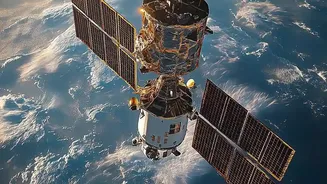
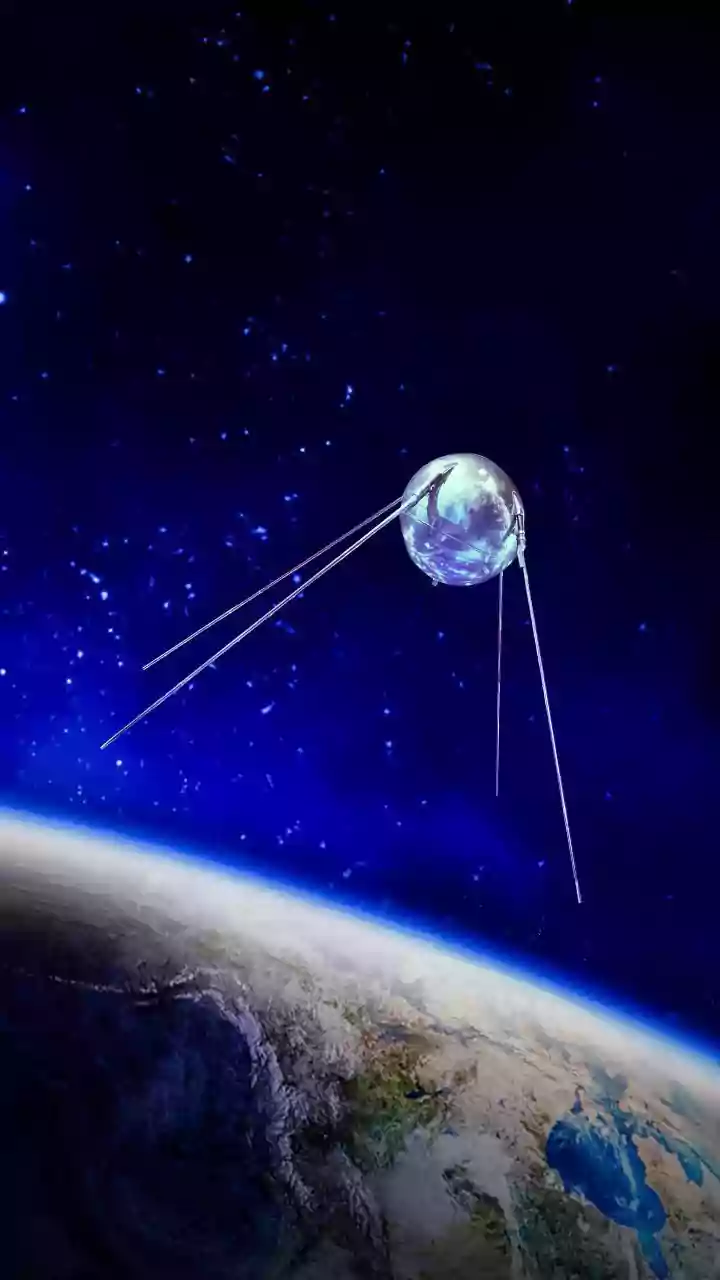
From the GPS that guides your car to the financial transactions that power the global economy, and from weather forecasts to military communications, our reliance on satellites is absolute and ever-growing. There are now more than 13,000 active satellites in low-Earth
orbit (LEO), forming an invisible infrastructure that supports countless aspects of daily life. This dependence makes them a critical, yet highly vulnerable, asset. The question of their security is not just a military concern; the stability of our interconnected world hinges on their continued operation. Recent geopolitical tensions, including reports of Russia developing a space-based nuclear anti-satellite capability, have brought this vulnerability into sharp focus, prompting a renewed urgency in understanding the potential consequences.
A Threat Proven by History
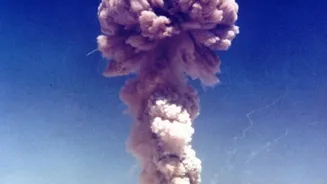
The idea of a nuclear explosion in space is not science fiction. During the Cold War, both the US and the Soviet Union conducted high-altitude nuclear tests. The most significant of these was the American 'Starfish Prime' test in 1962, which detonated a 1.4-megaton warhead 400 kilometres over the Pacific Ocean. The blast created a brilliant artificial aurora visible for hundreds of kilometres, but its most profound effects were invisible. It generated a powerful electromagnetic pulse (EMP) and, more critically, created an artificial radiation belt of trapped electrons that lingered for years. In an era with only a few dozen satellites in orbit, Starfish Prime damaged or destroyed at least a third of them in the months that followed, including the pioneering Telstar communications satellite.
The Real Killer: An Artificial Radiation Belt
When a nuclear weapon detonates in the vacuum of space, the blast and heat are not the primary threats to satellites. The danger comes in two forms. The first is a prompt burst of X-rays and gamma rays that can instantly damage the electronics of any satellite in its line of sight. The second, more insidious threat is the creation of an artificial radiation belt. Electrons released by the detonation become trapped by the Earth's magnetic field, forming a persistent 'donut' of intense radiation in low-Earth orbit. Satellites, travelling at thousands of kilometres per hour, repeatedly pass through this belt. With each pass, their sensitive electronics absorb a cumulative dose of radiation, leading to system failure and eventual destruction.
New Simulation Shows Catastrophic Failure
A new, not-yet-peer-reviewed study from researchers at the University of Wisconsin-Madison and Princeton University has modelled this exact scenario with frightening clarity. Their simulation examined a 1-megaton nuclear detonation at an altitude of 500 kilometres. The results are staggering. The lingering artificial radiation belt is the key factor. According to the model, repeated exposure would disable approximately 25% of the LEO satellite fleet within one day, 78% after three days, and a devastating 98% within a single week. Even if satellites were assumed to be three times more radiation-tolerant, the study found 97% would still be rendered inoperable within two weeks. A smaller, 100-kiloton blast would still disable the vast majority of satellites, though over a longer period of about a year.
A Cascade of Collisions and Debris
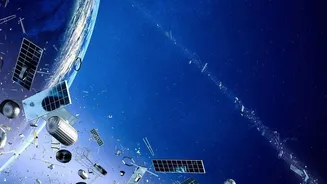
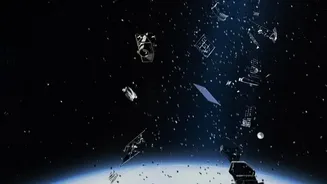
The destruction of the satellites themselves is only the beginning. Once disabled, these thousands of dead spacecraft would lose their ability to manoeuvre. They would become uncontrolled debris, dramatically increasing the risk of collisions in an already crowded space. The same simulation predicts that a single detonation could lead to approximately 20 major satellite collisions within two years. These collisions would, in turn, generate thousands of new pieces of space junk, creating a hazardous environment that could persist for years, if not decades. This means that even attempting to replace the lost satellite constellations would be fraught with peril, as new spacecraft would have to navigate both the persistent radiation and a minefield of debris.
The Urgent Search for Resilience
These dire predictions are driving an urgent re-evaluation of satellite resilience. The goal is not just to survive an attack, but to make such an attack less appealing—a concept known as 'deterrence by denial'. Strategies being explored include 'hardening' the electronic components of critical satellites to better withstand radiation, though this is costly and may not be commercially practical for large constellations. Another approach involves building more distributed and proliferated LEO constellations, like those being deployed for global internet services. The sheer number of satellites in these networks makes them more difficult to disable entirely with a single event. Ultimately, the focus of these simulations and studies is to understand the full scope of the threat so that nations can build a more robust and survivable space infrastructure, ensuring the services we depend on are protected.