







The Original Blueprint: Sholay (1975)
You cannot discuss mass action spectacles in India without starting with Sholay. Directed by Ramesh Sippy, this film wasn't just a movie; it was a phenomenon that set the template for decades to come. It perfected the 'masala film' by blending action,
comedy, romance, and drama into a seamless whole. With its iconic friendship between Jai and Veeru, the unforgettable villainy of Gabbar Singh, and dialogues that are now part of India's daily lexicon, Sholay was a technical and narrative marvel. It was one of the first Indian films shot in 70mm with stereophonic sound, creating an immersive experience that audiences had never felt before. Its grand scale and unforgettable characters created a cultural touchstone that still resonates over fifty years later.
The Game Changer: Baahubali (2015-2017)
For years, Hindi cinema was seen as the primary face of Indian film. S.S. Rajamouli's Baahubali saga shattered that perception. This two-part epic, originally in Telugu, proved that a story rooted in Indian mythology and emotion, combined with world-class VFX, could transcend linguistic barriers. It effectively birthed the modern 'pan-Indian film' movement, encouraging filmmakers to think on a national scale. The cliffhanger at the end of the first film became a national obsession, demonstrating the power of compelling storytelling. Baahubali didn't just break box office records; it fundamentally changed the economic and cultural landscape of Indian cinema, proving that audiences across the country were ready for grand, spectacle-driven stories, regardless of the language.
The Gritty Anti-Heroes: KGF & Pushpa
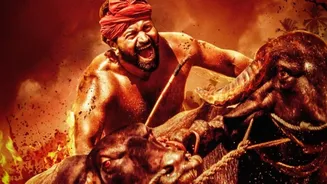
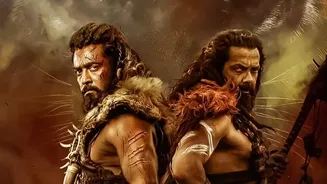
Following the path paved by Baahubali, films from the South continued their ascent, but with a new flavour. KGF: Chapter 1 (2018) from the Kannada industry and Pushpa: The Rise (2021) from Telugu cinema introduced a grittier, more stylized anti-hero. These films revived the 'angry young man' archetype, reminiscent of Amitabh Bachchan's roles in the 1970s, but updated for a new generation. The protagonists, rising from humble beginnings to the top of the criminal underworld, struck a chord with audiences across North India who were craving larger-than-life heroes. The success of their Hindi-dubbed versions was immense, proving that a compelling hero's journey, packed with swagger and powerful dialogues, has a universal appeal that defies regional boundaries.
The Global Juggernaut: RRR (2022)
If Baahubali opened the door, S.S. Rajamouli's RRR blew it off its hinges and took it global. This maximalist epic, a fictional tale of two real-life revolutionaries, was a masterclass in combining breathtaking action sequences, heartfelt emotion, and infectious musical numbers. RRR became a worldwide sensation, earning rave reviews from Western critics and filmmakers, and even securing an Oscar. Its success on streaming platforms introduced global audiences to the unique energy of Indian 'masala' filmmaking. The film showed that an unapologetically Indian story, filled with local cultural context, could find a massive international audience when executed with technical brilliance and conviction.
The Resurgence of Bollywood's Mass Formula
The tidal wave of pan-Indian hits from the South prompted a strategic shift in Bollywood. Recognizing the audience's appetite for high-octane entertainment, Hindi cinema saw a powerful return to the mass-action formula. Films like Pathaan and Jawan (2023), both starring Shah Rukh Khan, embraced the spectacle. Jawan, directed by Atlee, a master of the genre from Tamil cinema, particularly exemplified this trend by blending a Southern-style mass narrative with a Bollywood superstar, resulting in one of the highest-grossing Indian films of all time. These successes demonstrated that the desire for grand, hero-centric, and emotionally charged theatrical experiences is a powerful, unifying force across the entire nation.