



The New Nutrition Label for Media
In an era where deepfakes and manipulated content are becoming increasingly common, the question of what is real has never been more urgent. In response, a coalition of major tech and media companies, including Adobe, Microsoft, and the BBC, has developed
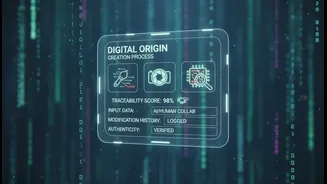
a new open standard called Content Credentials. Think of it as a tamper-evident “nutrition label” for digital content. This technology attaches secure metadata to a file—be it an image, video, or audio clip—that details its origin and history. This information travels with the file, allowing anyone to inspect its journey from creation to consumption. The standard, technically known as C2PA (Coalition for Content Provenance and Authenticity), was designed to bring transparency back to a digital world struggling with a trust crisis.
Unpacking the Digital Receipt
So how does it work in practice? When a photographer using a C2PA-enabled camera takes a picture, the device cryptographically signs and embeds a manifest of information into the file from the moment of capture. This manifest can include details like the creator's identity (if they opt-in), the tool used, and the date and time. If that image is then opened in a compatible program like Adobe Photoshop, any significant edits—such as the use of generative AI or color adjustments—are logged in the manifest. This creates a verifiable chain of custody. Anyone can then use a free online tool, like the one at contentcredentials.org, to upload the file and review its history. If the file or its embedded credentials have been altered, the cryptographic signature will be broken, making tampering evident.
A Tool, Not a Truth Machine
This is where the crucial distinction lies. Content Credentials certify the history of a file, not the truthfulness of what it depicts. A credential can prove a photo was taken on a specific camera at a specific time, but it can't tell you if the scene was staged. It can tell you an image was generated by AI, but not whether that AI creation is being used to mislead people. The system is also not foolproof. The biggest loophole is the 'analog hole': simply taking a screenshot of a fake image creates a brand-new file with no history, effectively bypassing the system. Furthermore, many social media platforms and messaging apps historically strip this kind of metadata to save space, though this is slowly changing. The absence of a credential doesn't automatically mean a file is fake; it could be an older image or one handled by a non-compliant tool.
Asking Smarter Questions
The true value of Content Credentials isn't in providing easy answers, but in empowering us to ask better questions. Instead of blindly trusting a checkmark, we should use this technology as a starting point for investigation. When you see a credential, don't just stop at 'verified'. Click on it. Ask yourself: Who is the creator? Does the manifest show the involvement of generative AI? Are the edits made consistent with the context, like a journalist cropping a photo versus adding or removing key elements? If a piece of content lacks credentials, the question becomes: why? Is it from a source that predates the technology, or is its history being deliberately obscured? This framework shifts us from being passive recipients of information to active investigators. It encourages a mindset of healthy, informed skepticism, which is far more valuable than automated trust.