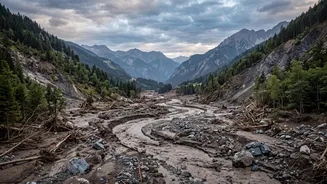







The Anatomy of a Flash Flood
Unlike river floods that build over days, a flash flood is defined by its staggering speed. It occurs when water levels rise rapidly, typically within six hours of a triggering event. This can be caused by intense, heavy rainfall from a thunderstorm,
a tropical storm, or a cloudburst. The sheer volume of water overwhelms the land's ability to absorb it, creating a fast-moving torrent that sweeps through low-lying areas, canyons, and urban streets. This suddenness is the core of their danger, leaving almost no time for warnings or evacuation.
The Prediction Problem: It's All Local
Meteorologists can predict that a large storm system will bring heavy rain to a region. However, pinpointing the exact location where the most intense rain will fall is incredibly difficult. Flash floods are highly localized phenomena. A shift of just a few kilometres in a storm's path can be the difference between a manageable downpour and a catastrophic flood, as it determines which watershed basin receives the deluge. Forecasting models must account for not just rainfall intensity and duration, but also complex variables like topography, soil moisture, and vegetation, making precise, real-time predictions a significant scientific challenge.
The Urban Multiplier Effect
In our cities and towns, the problem is magnified. Concrete, asphalt, and rooftops create vast impermeable surfaces that do not absorb water. This dramatically increases the volume and speed of surface runoff, which is then funnelled into drainage systems. These systems, often decades old, are frequently overwhelmed by the intensity of modern storms, leading to water backing up and creating floods where they otherwise might not occur. Urbanisation can increase runoff by two to six times compared to natural terrain, effectively manufacturing a flood hazard.
Geography's Dangerous Role
Natural topography plays a critical part. In hilly or mountainous regions, like the Himalayas, steep slopes cause water to accelerate rapidly, gathering force and debris as it rushes downhill. In arid, desert-like areas, dry, hard-packed soil also resists absorption, leading to sudden and violent runoff. Another crucial factor is how saturated the ground is before a storm. If the soil is already wet from previous rains, its capacity to absorb more water is drastically reduced, meaning even a moderate storm can trigger a flash flood.
The Challenge of Escaping
The primary reason flash floods are so deadly is the lack of time to react. The speed of the rising water can catch people completely by surprise. Many underestimate the power of moving water; just six inches can knock a person off their feet, and about two feet is enough to sweep away most vehicles, including SUVs. Driving through flooded roadways is a leading cause of flash flood fatalities, as the roadbed underneath may be washed away and the vehicle can easily be carried into deeper water. The advice from safety officials is unequivocal: if you encounter a flooded area, turn around and find another route.