




The Solar System's Great Candidate
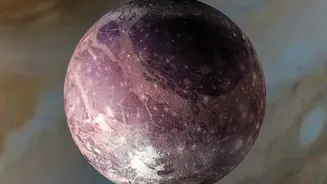
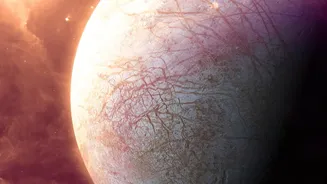
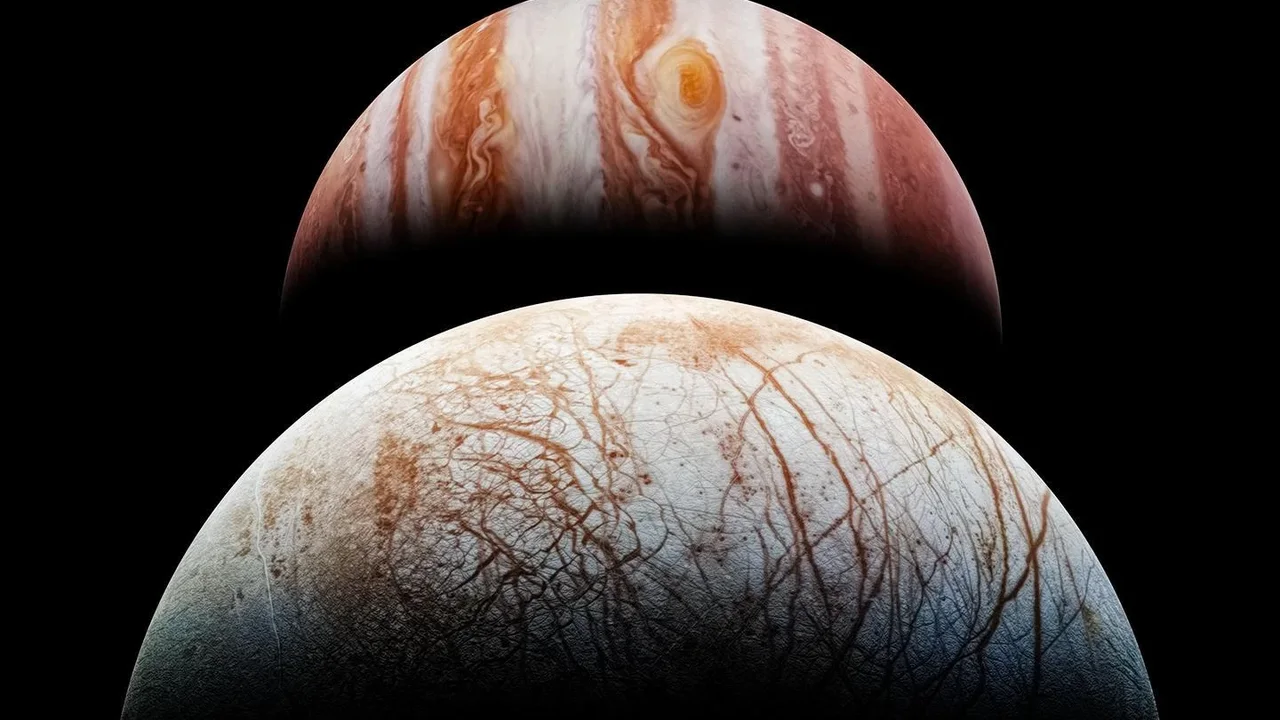
For decades, Europa has been a prime target in the search for extraterrestrial life. Evidence strongly suggests it hides a global ocean of salty liquid water, potentially containing more than twice the water of all of Earth's oceans combined. This water is kept
liquid not by sunlight, but by immense tidal forces. As Europa orbits the gas giant Jupiter, its interior is constantly flexed and stretched, generating heat that prevents the deep ocean from freezing solid. This combination of water and energy, along with chemicals that may be supplied by the seafloor and the surface, makes Europa a compelling candidate for habitability. The central question is no longer if an ocean exists, but rather, what are its properties and could it truly support life?
An Icy Obstacle Course
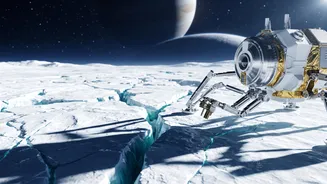
The single greatest challenge to exploring this alien sea is its formidable ice shell. Scientists estimate the crust to be anywhere from a few kilometres to over 30 kilometres thick. Landing and drilling through this layer is beyond our current technological capabilities. Therefore, to understand the ocean, missions must study it from orbit, using instruments that can remotely sense what lies beneath. This turns the problem into a grand-scale detective game, requiring scientists to interpret subtle clues from the surface and the space around the moon to build a picture of the hidden world below.
Seeing with Radio Waves
One of the most crucial tools for this deep scan is ice-penetrating radar. Both NASA's Europa Clipper and the European Space Agency's JUICE missions are equipped with sophisticated radar instruments, REASON and RIME, respectively. This technology, honed in studying Earth's own ice sheets in Antarctica, sends radio waves down into the ice. These waves travel until they hit a boundary—either a pocket of liquid water within the ice or, most excitingly, the top of the main ocean itself—and then bounce back. By analysing the time it takes for the echo to return and its strength, scientists can map the thickness of the ice shell and search for trapped water bodies, which could be more accessible and reveal crucial details about the moon's geology.
Decoding Magnetic Clues
The first strong evidence for Europa's ocean came from magnetism. As Europa orbits Jupiter, it passes through the planet's powerful magnetic field. This constantly changing magnetic environment induces electrical currents in any conductive material within the moon. A global ocean of salty water is an excellent electrical conductor. These currents, in turn, create their own secondary, or 'induced,' magnetic field. The Galileo spacecraft first detected this faint magnetic signature decades ago. Now, the Europa Clipper mission's advanced magnetometer (ECM) will measure this field with far greater precision. By studying exactly how the induced field changes, scientists can deduce the ocean's depth, its salt content (conductivity), and the thickness of the ice shell above it.
Our Robotic Detectives in Space
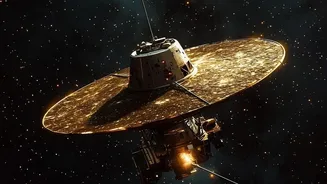
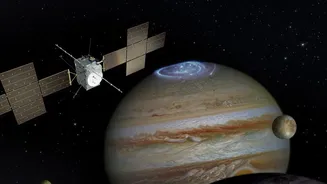
The primary investigators in this deep-space mystery are two robotic explorers currently making their way to the Jovian system: NASA's Europa Clipper and ESA's JUICE (Jupiter Icy Moons Explorer). Launched in 2024 and 2023 respectively, these missions will arrive around the turn of the decade. Europa Clipper is a dedicated specialist, designed to perform dozens of close flybys of Europa, some as low as 25 kilometres above the surface. Its nine advanced instruments, including the radar and magnetometer, will work in concert to build a detailed profile of the moon. JUICE has a broader mandate to study Jupiter and its three largest icy moons, but it will also perform crucial flybys of Europa, using its own suite of instruments to provide complementary data and confirm findings.