







The Promise of a Seamless Journey
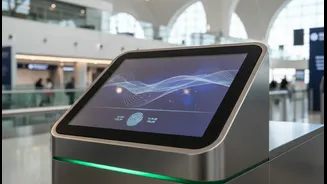
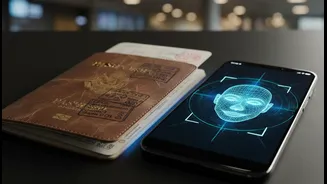
DigiYatra, the government's facial recognition-based system for air travel, is undeniably impressive in its execution. For those who have enrolled, the process is as smooth as advertised. By linking your Aadhaar and travel details to a biometric profile
on your phone, you can breeze through airport entry and security checks with just a quick facial scan. Gone is the need to fumble for your ID and boarding pass at every checkpoint. The system is designed to reduce queues, enhance security, and create a paperless, contactless experience. According to official data, it can slash airport processing times significantly, turning a potentially stressful 15-minute ordeal into a 30-second breeze. On paper and in practice, it is a showcase of how technology can streamline public infrastructure.
When Choice Becomes Coercion
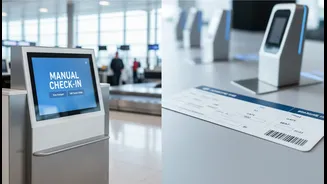
The problem arises not from the technology itself, but from its implementation on the ground. For DigiYatra to be a genuine choice, the alternative must also be functional. However, travelers across the country have reported a worrying trend: non-DigiYatra queues are often understaffed, poorly managed, or have very few functional gates, creating long, frustrating waits. This creates a powerful incentive to enrol in DigiYatra not for its inherent convenience, but simply to escape the engineered inconvenience of the manual lanes. This subtle coercion undermines the very idea of a voluntary system. The Ministry of Civil Aviation has repeatedly clarified that DigiYatra is optional, but when one path is artificially slowed to a crawl, the 'choice' to take the fast lane begins to feel less like a choice and more like a necessity.
The Hidden Costs of a Quick Entry
Beyond the queues, the push for enrolment has raised serious questions about consent and data privacy. Numerous passengers have complained about being unknowingly or forcibly enrolled by airport staff eager to meet targets. While the DigiYatra Foundation assures users that data is stored encrypted on the user's phone and purged from airport systems within 24 hours of a flight, concerns persist. The policy allows for data sharing with government agencies under certain protocols and for users to opt-in to value-added services from third-party partners, which could lead to data monetization and profiling. For a system handling the sensitive biometric data of millions, the lack of an independent audit, as flagged by a parliamentary committee, is a significant oversight. These are not minor issues; they strike at the heart of an individual's right to privacy and control over their personal information.
Public Infrastructure Must Serve Everyone
A fundamental principle of public infrastructure is that it must be accessible to all. By design, a system that relies on a smartphone, an Aadhaar-linked number, and a degree of technological literacy will exclude segments of the population. This includes elderly citizens, those without smartphones, or individuals who are simply not comfortable sharing their biometric data. Creating a superior experience that is only available to a select group, while allowing the standard service to degrade, is a disservice to the public. An airport is a public utility, not a premium club with different tiers of service. The goal should be to improve the travel experience for every single passenger, not just for the 'Digi-Yatris'.
The Path Forward: Convenience for All
The solution is not to abandon DigiYatra. It is a powerful tool with clear benefits. The solution is to insist that its success does not depend on the failure of the alternative. Airport operators must be mandated to maintain manual lanes with the same level of efficiency and staffing as the DigiYatra gates. Wait times for both systems should be monitored and benchmarked. True progress is not just a faster lane for some; it is a more efficient airport for all. We can and should embrace technological innovation, but we must do so inclusively. The convenience of DigiYatra should be a bonus for those who choose it, not a tax on those who don't.