
Find a Unifying Colour Palette
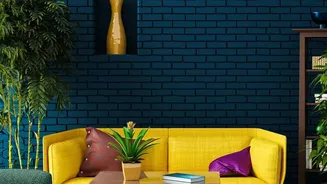
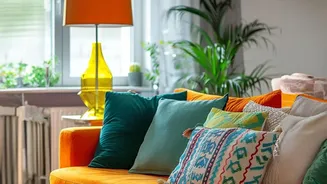
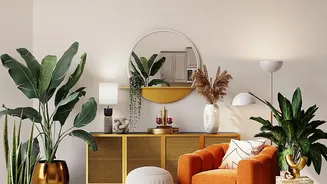
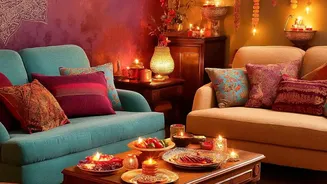
The single most effective way to make a room full of different furniture styles feel intentional is through colour. Start by choosing a core palette of three to five colours and use them repeatedly. This doesn't mean your walls and sofa must be the same
shade. Instead, let a neutral like beige or grey dominate, then weave in accent colours through textiles, art, and smaller decor pieces. Perhaps the deep blue from a modern painting is picked up in the upholstery of a traditional 'charpai' or in the pattern of a cushion on a mid-century modern chair. This repetition creates a visual thread that ties everything together, making the mix feel harmonious rather than haphazard.
Use the 80/20 Rule
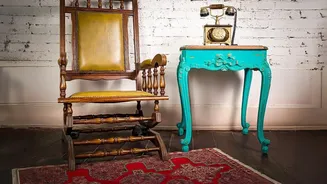
A key principle for successful eclectic design is the 80/20 rule. This means you should let one dominant style take up about 80% of your room's visual space. This could be a clean, contemporary look with minimalist sofas and tables. The remaining 20% is where you introduce your accent style. This is your chance to bring in personality with a story-filled piece—perhaps a single, ornate Rajasthani 'sandook' (chest), a pair of Chettinad carved pillars, or a vintage colonial-era armchair. By establishing a clear primary style, the accent pieces stand out as deliberate, characterful additions rather than random objects.
Create Connections with Material and Texture
Different styles can be bridged by finding a common material or finish. Teak, for example, is a cornerstone of both traditional Indian and mid-century modern furniture, making it a perfect link between the two styles. A sleek, modern dining table can coexist beautifully with intricately carved chairs if they both share a similar wood tone. Texture is another powerful unifier. Layering is crucial. In an Indian context, this is effortless. Think of throwing a vibrant Kantha quilt over a minimalist sofa, placing a jute rug under a glass coffee table, or using raw silk and block-printed cotton cushions on furniture of varying eras. These textures add warmth, depth, and a tactile connection that makes the room feel cohesive.
Play with Scale and Proportion
A common mistake in eclectic design is having too many small, disconnected items, which creates clutter. Instead, think about balance and scale. Juxtapose a large, solid piece of furniture, like a modern, oversized sofa, with a more delicate, ornate item, such as a traditional Indian 'jhoola' (swing). Or, pair a heavy, rustic wooden coffee table with a light, airy Scandinavian armchair. The contrast between large and small, heavy and light, and ornate and simple creates a dynamic visual tension that is engaging and prevents the room from feeling flat or monotonous. Ensure there is enough negative space around statement items to let them breathe and be appreciated.
Ground the Space with an Anchor Piece
Every eclectic room benefits from a strong anchor piece that serves as the focal point and sets the tone. This could be a large, colourful piece of art, an eye-catching rug with a bold pattern, or a significant piece of furniture. In an Indian home, this might be a stunning Jaipur rug, a massive Pichwai painting, or an architectural element like an antique door repurposed as a dining table. Once you have your anchor, you can build the rest of the room around it, choosing other pieces that complement its colours, patterns, or overall feeling. This central element acts as the 'thesis statement' for the room, giving all the other pieces a clear purpose.
Tell Your Personal Story
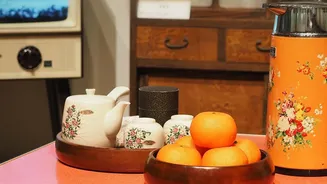
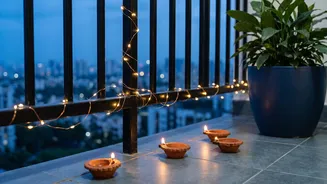
Ultimately, eclectic design is about creating a space that is uniquely yours. The most successful eclectic rooms are those that reflect the personality and history of the people who live in them. Don't be afraid to mix a modern lamp you bought last week with a brass 'diya' inherited from your grandmother. Combine art prints from a local gallery with souvenirs from your travels. This style gives you the freedom to showcase items you truly love, regardless of their design pedigree. The common thread is you. A room filled with objects that have personal meaning and tell a story will always feel more cohesive and authentic than one that simply follows a trend.