







More Than Just a Meal Prep
It might seem counterintuitive to cut a plant you are trying to grow, but regular trimming is essential for its health. When you harvest herbs, you are effectively pruning them. This action sends a signal to the plant to redirect its energy from growing
taller to producing more side shoots and leaves. This results in a bushier, fuller plant. Without this regular trim, many herbs, like basil and cilantro, will become "leggy," with long, sparse stems and fewer flavourful leaves. Consistent harvesting is the key to encouraging the lush, dense growth that most gardeners desire.
Preventing a 'Bolting' Crisis
One of the biggest challenges in herb gardening is a process called “bolting.” This is when a plant, often due to stress from heat or inconsistent watering, shifts its focus from producing leaves to producing flowers and seeds. Once an herb like basil or cilantro bolts, its flavour can become bitter, and leaf production slows dramatically or stops altogether. Regular harvesting is your primary defence against bolting. By frequently snipping the tops of the plants and removing any flower buds as soon as they appear, you trick the plant into staying in its leafy growth phase for longer. This extends your harvesting window and ensures the leaves retain their optimal flavour and aroma.
How to Harvest Like a Pro
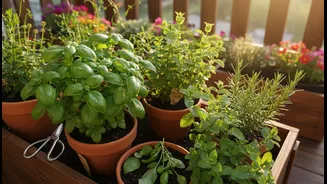
The correct harvesting technique varies slightly between different types of herbs, but a few general rules apply. Always use clean, sharp scissors or pruners to make a clean cut and avoid damaging the plant. A good rule of thumb is to never remove more than one-third of the plant at once, as this can cause stress. For leafy herbs like basil, mint, and oregano, snip the stem just above a pair of leaves. This is where new growth will emerge, often resulting in two new stems where there was once one. For herbs like chives and parsley, you can cut the outer stalks near the base of the plant, which allows new shoots to grow from the center.
Specific Tips for Common Balcony Herbs
For basil, pruning every couple of weeks is ideal to prevent it from getting leggy and flowering. Snip the top 3-4 inches of the stems. Mint is a vigorous grower and benefits from frequent trimming to keep it from taking over; you can trim its stems by as much as half every few weeks. With woody herbs like rosemary and thyme, you can snip the top 2-3 inches of newer, greener growth, which is more tender. Regular pruning will also keep them from developing overly thick, woody stems. For cilantro, snip stems before it flowers, cutting about a third of the way down to allow for regrowth.
Dealing with a Bountiful Harvest
Frequent harvesting can leave you with more fresh herbs than you can use at once. Thankfully, preserving them is simple. Freezing is one of the easiest methods, especially for tender herbs like basil, parsley, and mint. You can chop the herbs and freeze them in ice cube trays with a little water or olive oil. This creates convenient portions to drop into soups, sauces, and other dishes. Drying works best for low-moisture, woody herbs like oregano, rosemary, and thyme. Simply tie the stems in small bundles and hang them upside down in a warm, dry, and airy place away from direct sunlight. Once they are brittle, crumble the leaves from the stems and store them in an airtight container.