



The Wandering Stars: Our Planetary Neighbours
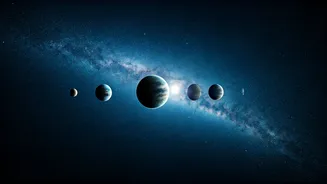
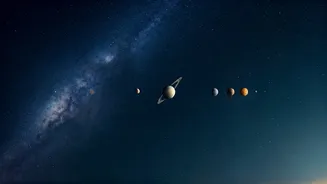
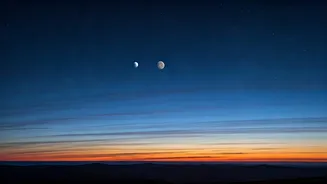
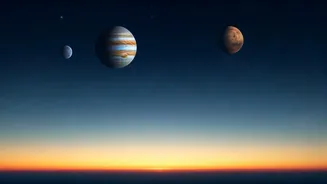
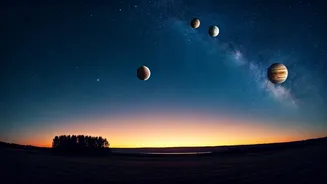
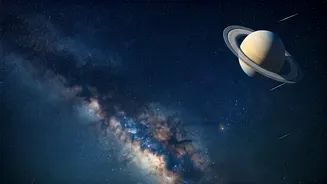
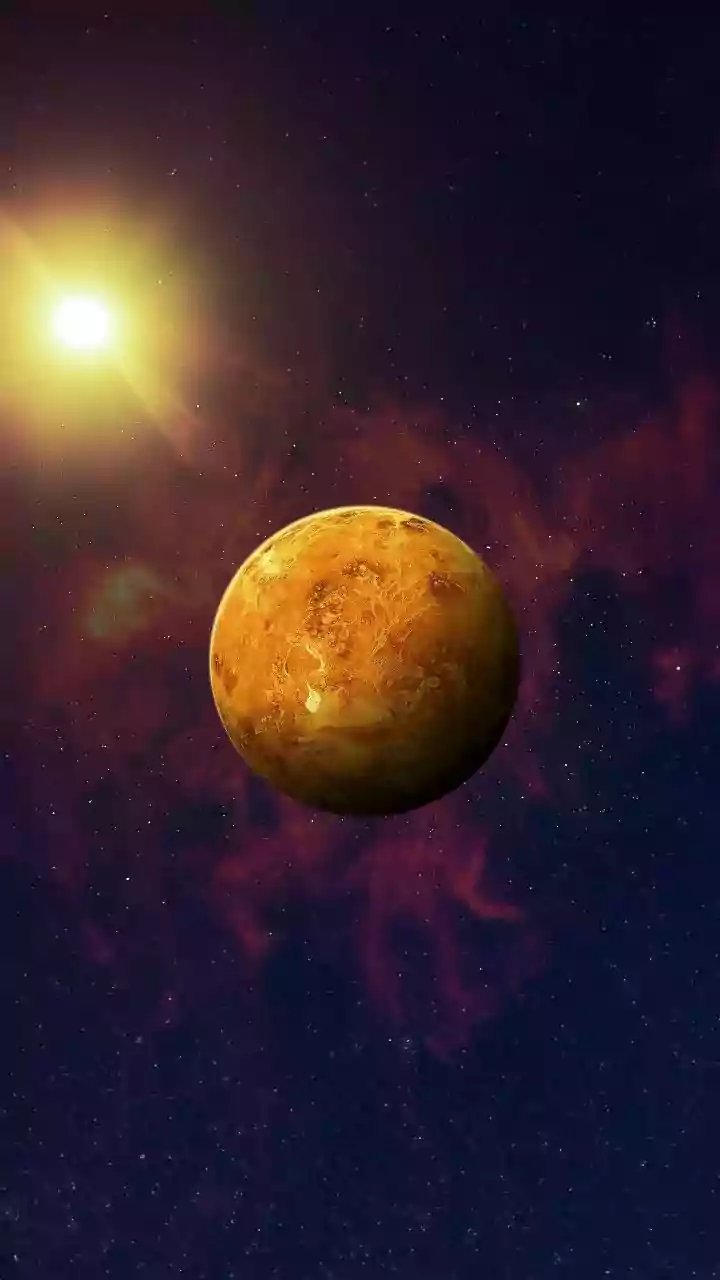
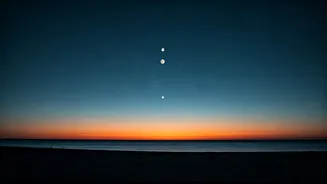
Unlike the fixed, twinkling stars, planets are the wanderers of our solar system, and several are bright enough to be seen easily. Venus is the most brilliant ‘star’ you’ll see, appearing as a dazzling white light in the west after sunset or in the east
before sunrise. Jupiter is the second brightest, a steady, powerful beacon of light. Mars glows with a distinct reddish hue, while Saturn, though fainter, appears as a calm, yellowish-white point of light. The best part? They don’t twinkle like stars; their light is more constant. You can use a simple stargazing app to identify which ones are currently visible in your night sky.
A Human Star: The International Space Station (ISS)
Imagine seeing a satellite carrying astronauts, travelling at 28,000 km/h, with just your eyes. You can! The International Space Station (ISS) is the third brightest object in the sky after the Sun and Moon. It looks like a fast-moving, very bright star gliding silently across the sky. It doesn’t blink or have flashing lights. A pass typically lasts a few minutes. NASA's ‘Spot The Station’ website and various apps can tell you the exact time and path the ISS will be visible from your city. It's a powerful reminder of human ingenuity, visible from your own backyard.
Shooting Stars on Schedule: Meteor Showers
Everyone loves a shooting star, but did you know you can plan to see dozens of them? Meteor showers happen when Earth passes through the trail of debris left by a comet or asteroid. While stray meteors can be seen on any night, major showers offer a spectacular display. The Perseids in August and the Geminids in December are two of the most reliable and dramatic showers visible from India. For the best view, find a spot away from city lights, let your eyes adjust to the dark for about 20-30 minutes, lie back, and be patient. No special equipment needed—just a clear night and a comfortable spot.
Our Galactic Home: The Milky Way
Yes, you can see our own galaxy. On a clear, moonless night, far from the glare of city lights, the Milky Way reveals itself as a faint, hazy band of light stretching across the sky. It’s not a solid line but a collection of billions of distant stars and dust clouds. In India, the best time to view it is during the pre-monsoon summer months (April-June) or post-monsoon (September-October) when the galactic core is high in the sky. While light pollution in cities makes this challenging, travelling just an hour or two to a darker location can make all the difference. Seeing that ghostly river of stars is an unforgettable, humbling experience.
Jewels of the Night: Constellations and Star Clusters
Constellations are the sky's original stories, and many are easy to spot. Orion the Hunter, with its famous three-star belt, is a prominent winter constellation in India. Look for the Big Dipper (part of Ursa Major) to find the North Star, Polaris. Beyond these patterns, you can spot star clusters. The Pleiades, also known as the Seven Sisters or Krittika, is a stunning cluster that looks like a tiny, misty patch of light to the naked eye. In a dark sky, you can resolve six or seven individual stars. It’s a beautiful sight and one of the easiest deep-sky objects to appreciate without any aid.