


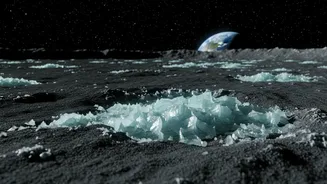
A Monumental Leap for Lunar Exploration
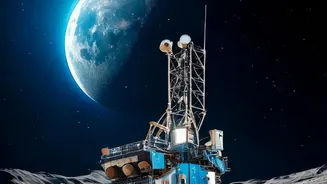
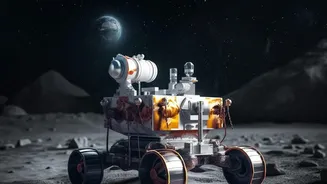
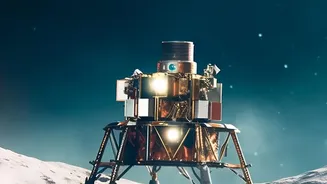
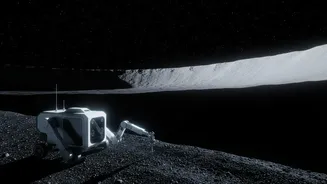
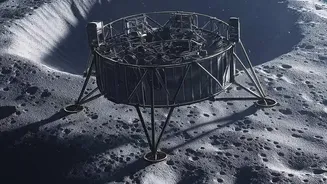
ISRO has confirmed a significant breakthrough in its lunar exploration efforts. Robotic probes operating on the Moon's surface have successfully deployed and operated new technology designed to extract and purify water from deposits of ice found in the permanently
shadowed craters of the lunar south pole. This achievement is not just a technological demonstration; it represents a critical step toward establishing a sustainable human presence on the Moon. Recent studies have suggested that subsurface ice in the polar regions could be 5 to 8 times more abundant than ice on the surface, making this capability crucial. For years, space agencies globally have aimed to master in-situ resource utilization (ISRU), the concept of using local resources rather than transporting everything from Earth. By proving it can turn frozen lunar water into a usable resource, ISRO has positioned India at the forefront of this new era of space exploration.
The Challenge of Lunar Water
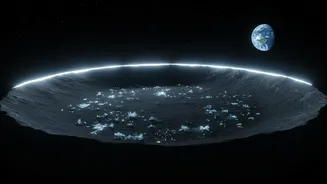
The existence of water-ice on the Moon, particularly in the permanently shadowed regions (PSRs) of the south pole, has been a major focus of lunar science. These craters are some of the coldest places in the solar system, with temperatures plummeting below -240°C, which has preserved ice for billions of years. However, this ice isn't like a frozen lake on Earth. It's mixed with lunar soil, or regolith, and likely contains various other contaminants. Any mission hoping to use this water must first extract it from the soil and then purify it to make it safe for drinking or to produce breathable oxygen and rocket fuel. This process is the core of ISRU and is seen as essential for reducing the immense cost and logistical challenges of future long-duration missions to the Moon and beyond.
How the Purification Technology Works
While ISRO has not released the exact technical specifications, the process likely involves a multi-stage system designed for the harsh lunar environment. The first step is to heat the ice-rich regolith, causing the frozen water to sublimate directly into vapor. This process separates the water from the soil and rock. This vapor is then collected and re-condensed into liquid or solid form. The crucial next step is purification. This could involve several methods being developed globally, such as systems using powerful ultrasound waves to break down contaminants or processes that heat the water under high pressure to a "supercritical" state where pollutants are more easily removed. Given the need for robust, low-maintenance systems, ISRO’s technology is likely a compact and energy-efficient solution capable of operating autonomously in extreme cold and darkness.
Operating in the Eternal Darkness
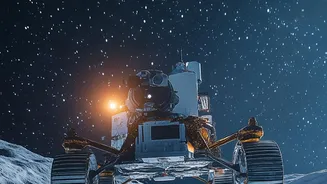
The technical success of the purification system is matched by the engineering feat of simply operating in a permanently shadowed crater. These regions present some of the most difficult conditions for robotic exploration. The complete lack of sunlight means solar-powered rovers are not an option, necessitating alternative power sources like radioisotope heater units or advanced batteries. The extreme cold can make materials brittle and electronic components fail. Furthermore, communication can be a major hurdle, as many of these craters may not have a direct line of sight to Earth for long periods. ISRO's successful deployment demonstrates advanced capabilities in thermal management, power systems, and autonomous robotic operations, overcoming challenges that have long been a barrier to exploring these scientifically rich areas.
What This Means for India's Future in Space
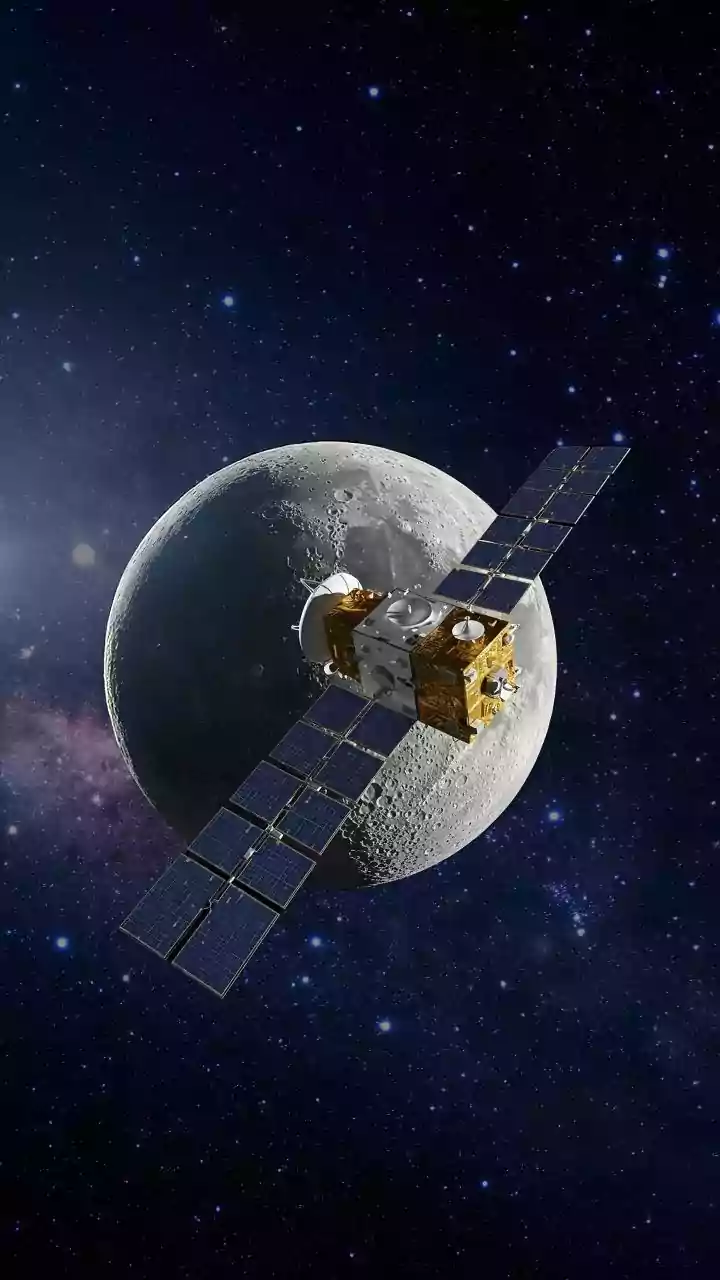
This achievement is a game-changer for India's space ambitions. The ability to produce water on the Moon is a cornerstone for building a future lunar base, which Prime Minister Narendra Modi has envisioned for 2040. Water can be used for astronaut life support, and it can also be split into hydrogen and oxygen to create rocket propellant. This could effectively turn the Moon into a refueling station for missions deeper into the solar system, including to Mars. This success builds upon the foundation of the Chandrayaan program, including the historic soft landing of Chandrayaan-3 and plans for Chandrayaan-4, a complex sample-return mission. By mastering a key ISRU technology, India not only enhances its own capabilities but also becomes an even more valuable partner in international space exploration collaborations, such as its work with Japan on the LUPEX mission to explore polar water resources.