


Why Millets Are a Climate Warrior
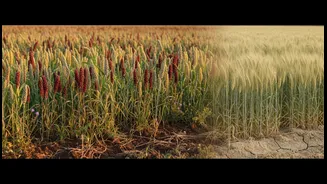
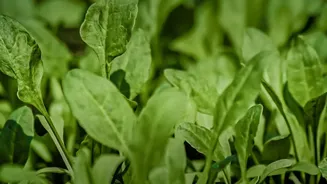
Millets are often called “climate-smart” for good reason. Unlike water-intensive staple crops like rice and wheat, many millet varieties are exceptionally hardy. They are drought-resistant, can be grown in high temperatures, and thrive in poor or marginal
soils with minimal agricultural inputs like fertilizers and pesticides. [5, 4] This makes them an ideal crop for farmers in arid and semi-arid regions facing unpredictable weather patterns. [3] As C4 crops, they possess high photosynthetic efficiency, meaning they convert more sunlight into energy with less water, giving them a low carbon and water footprint. [3] Their shorter growing cycles, with some varieties ready in as little as 60-70 days, allow for more flexible planting schedules, which is a crucial advantage in an era of climate uncertainty. [4] By cultivating millets, farmers can enhance agricultural productivity while protecting the ecosystem. [3]
A Nutritional Powerhouse for Your Plate
Beyond their environmental benefits, millets are packed with nutritional value, earning them the name “Nutri-Cereals” from the Government of India. [22] They are a rich source of protein, dietary fibre, vitamins, and essential minerals. [5, 12] For instance, finger millet (ragi) is an incredible source of calcium, containing almost ten times more than wheat. [12] Pearl millet (bajra) is loaded with iron, making it effective in combating anaemia. [12, 20] Being naturally gluten-free, millets are an excellent choice for individuals with celiac disease or gluten sensitivity. [17] Their high fibre content aids digestion, supports gut health, and helps in managing blood sugar levels due to a low glycaemic index, making them particularly beneficial for diabetics. [13, 17] Incorporating these grains into your diet is a simple way to boost your intake of essential nutrients. [12]
Meet Your Millets: A Quick Guide to Common Grains
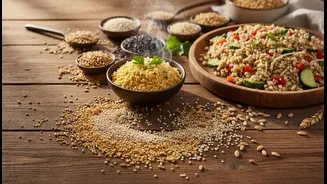
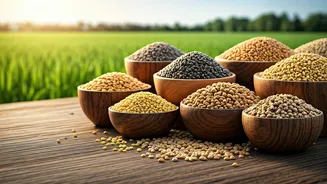
The world of millets is diverse, with several popular varieties available in India. [3] Sorghum (Jowar) is traditionally used to make flatbreads like rotis or bhakri. [9] Pearl Millet (Bajra) is common in states like Rajasthan and Haryana, famously used in khichdi and rotis. [7] Finger Millet (Ragi) is a South Indian staple, used to make everything from dosas and idlis to nutritious porridge (ragi malt). [7, 14] Minor millets are also gaining popularity. Foxtail millet (kangni), little millet (kutki), and barnyard millet (sanwa) are versatile grains that can be cooked similarly to rice and used in dishes like upma, pulao, and khichdi. [2, 7, 19] Each offers a slightly different nutty and earthy flavour profile, inviting culinary experimentation.
Getting Started: Simple Swaps and Easy Recipes
Adopting millets is easier than you might think. The simplest way to start is by boiling them just like rice. A general ratio is one part millet to two parts water for a fluffy, pilaf-style texture, or one part millet to three parts water for a creamier, porridge-like consistency. [15, 10] You can replace rice with cooked millet as a side dish for your favourite curries and dals. Millet flours like jowar, bajra, and ragi can be blended with wheat flour to make nutrient-rich rotis and parathas. [7] For breakfast, try making a simple upma with foxtail or little millet instead of semolina. [2] Many recipes require soaking the grains for a few hours to ensure they cook faster and are easier to digest. [9]
The Bigger Picture: A Return to Roots
The resurgence of millets is part of a larger movement towards sustainable and traditional food systems. Recognizing their potential, the Indian government has been actively promoting these 'Shree Anna' (mother of all grains) through various initiatives, following the UN's declaration of 2023 as the International Year of Millets. [18, 11] This push includes everything from supporting farmers and creating market linkages to promoting millet-based products through Production Linked Incentive (PLI) schemes. [11, 21] By choosing to cook with millets, consumers are not only making a healthy choice for themselves but are also supporting climate-resilient agriculture and contributing to the livelihoods of small-scale farmers. [3] It’s a powerful connection between our plate and the planet.