




Jasprit Bumrah: The Stutter-Step Assassin
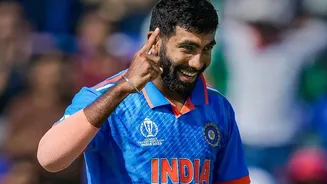
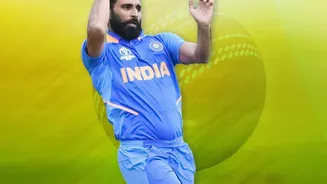
Jasprit Bumrah's action defies nearly every convention of fast bowling. He begins with a short, stuttering run-up that looks more like a warm-up jog. There are no long, rhythmic strides to build momentum. Instead, he generates explosive pace from just
a few steps, culminating in a stiff-armed, slingy release that seems to come out of nowhere. This compact, jerky motion is famously difficult for batters to time, as the release point is both quick and unusual. His hyperextended elbow and strong core allow him to whip the ball through at speeds regularly exceeding 145 km/h, all while maintaining pinpoint accuracy. The action's efficiency means fewer moving parts can go wrong, allowing him to consistently land his lethal yorkers and deceptive slower balls.
Kedar Jadhav: The Golden Arm from Down Under
For a period, Kedar Jadhav was India's secret weapon with the ball. A batsman by trade, he developed a bizarrely effective side-arm bowling style that was almost comically low to the ground. Instead of a traditional off-spinner's high-arm rotation, Jadhav would squat and release the ball from an angle barely above his shoulder, making it incredibly difficult for batsmen to pick the trajectory. The ball would often skid on at a low height, leading to stumpings and LBWs as batters were caught in a tangle. Jadhav himself admitted he developed the action out of a desire to be different, and after getting it cleared by then-coach Anil Kumble, he used it to great effect, often breaking crucial partnerships under the captaincy of MS Dhoni.
Shivil Kaushik: The 'Frog in a Blender' Returns
When Shivil Kaushik first appeared in the IPL, cricket fans did a double-take. His action was a mirror image of the famously contorted South African spinner Paul Adams, whose style was nicknamed the 'frog in a blender'. Kaushik, a left-arm wrist spinner, would twist his body into a knot, his head turning to face towards cover at the point of delivery. It looked physically impossible, yet he was able to deliver the ball with surprising accuracy. Batters confessed that even after watching video footage, it was hard to anticipate whether the ball was coming in or going out. Though his IPL career was brief, Kaushik's action became an instant sensation, proving that even in the modern, highly-analysed era of T20 cricket, true unorthodoxy can still cause chaos.
Debashish Mohanty: The Man Who Became a Logo
In the late 1990s, Debashish Mohanty was a promising swing bowler from Odisha with a memorably fluid and open-chested action. His style was so eye-catching that it reportedly served as the graphic inspiration for the official logo of the 1999 ICC Cricket World Cup. Mohanty's action, combined with a lanky frame, allowed him to generate significant swing, making him a difficult prospect with the new ball, especially in English conditions. Despite a short international career, he made a significant impact, particularly in that World Cup where he was India's second-highest wicket-taker. His career remains a fascinating piece of Indian cricket history, a bowler whose unique style became a global symbol for the sport's biggest tournament.