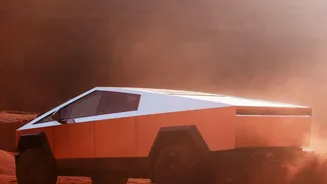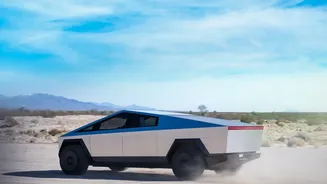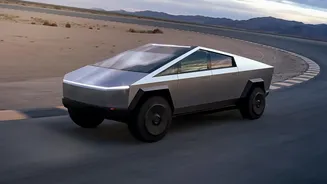




The Tesla Cybertruck story gets another twist. Elon Musk announced that production will now extend through summer 2027, delaying its planned shutdown to fulfill a fraction more of its massive order backlog before making way for a new project.
A Reprieve, Not a Reversal
To be clear,
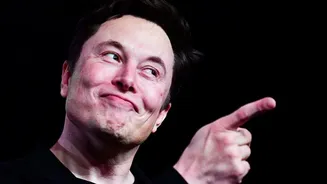
this isn't a delay in the way fans have come to expect. Just last week, Elon Musk announced that the controversial Cybertruck would end its production run in mid-2027 to free up factory space for the 'Cybercab' robotaxi. After an outcry from customers still waiting for their vehicle, Musk has now extended that deadline by a few months, to the end of summer 2027. The decision appears driven more by a desire to satisfy a portion of the massive order backlog than by a change in strategy. Musk himself noted it was not the 'smartest move from a profit-maximizing standpoint' but that there 'must be some room in this world for sentimentality'.
The Long, Bumpy Road
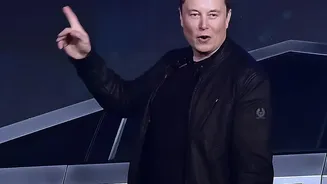
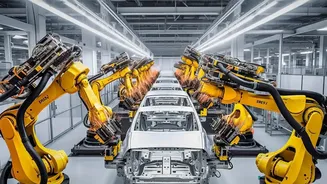
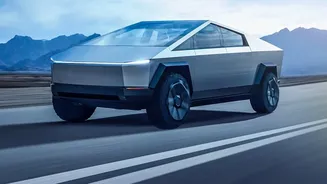
The Cybertruck's journey from a viral sensation to a production vehicle has been one of the most-watched sagas in the automotive industry. Unveiled in 2019 with famously shattered 'unbreakable' glass, its radical stainless-steel design and ambitious promises captured global attention, leading to hundreds of thousands of pre-orders. However, the very things that made it unique also made it incredibly difficult to build. The original 2021 production target slipped repeatedly due to the complexities of manufacturing its rigid steel exoskeleton and navigating global supply chain issues. First deliveries finally began in late 2023, four years after the initial reveal and at prices significantly higher than first promised.
From Hype to Harsh Reality
Once on the road, the Cybertruck's troubles continued. The vehicle has been subject to at least 11 recalls for issues ranging from accelerator pedals that could get stuck to loose trim pieces and faulty windshield wipers. Sales have also failed to meet the initial sky-high expectations. Musk once projected annual sales of 250,000 units, but actual sales have been a fraction of that, with an estimated 20,237 sold in the US in 2025. The polarizing design, which was a barrier to clearing safety regulations in major markets like Europe, also limited its global sales potential from the start.
An Order Backlog Too Big to Fill
Despite the production extension, Tesla has acknowledged it cannot fulfill all outstanding orders. Musk previously stated that the order rate 'far exceeds' the production rate and that many deposits would have to be refunded. This latest extension gives the company a few extra months to work through the backlog but ultimately confirms that many reservation holders will not receive their vehicle. To manage the end of the run, Tesla has also reportedly streamlined its offerings, discontinuing lower-priced models to focus solely on the top-tier 'Cyberbeast' variant, which saw a recent price increase.
The Future is the Cybercab
The decision to wind down Cybertruck production is fundamentally a strategic pivot. Tesla is betting its future less on consumer vehicles and more on autonomy and robotics. The factory space and engineering resources being freed up will be redirected to dramatically scale the production of the Cybercab, Tesla's fully autonomous robotaxi. This move mirrors Tesla's earlier decision to discontinue the Model S and Model X to prioritize its 'Optimus' humanoid robot. The Cybertruck, despite its iconic status, is ultimately making way for what Musk sees as the company's next major growth engine.