




Ditching the 'All or Nothing' Mindset
The most significant hurdle to festive fitness is often mental. We believe that if we cannot complete our usual hour-long gym session, there is no point in exercising at all. This 'all or nothing' approach is a perfect recipe for inconsistency, especially
when time is a luxury. The truth is, shorter, regular workouts are far more beneficial than sporadic, intense sessions. A 15 or 20-minute workout is not a failure; it is a strategic victory. It keeps your body in the habit of moving and your mind in the game, preventing the complete halt that can be so difficult to restart once the celebrations are over. By embracing what you can do, rather than fixating on what you cannot, you build a sustainable habit that can withstand any busy schedule.
The Compounding Power of Consistency
Consistency is more important for maintaining fitness than the duration of any single workout. Regular, short bursts of activity keep your metabolism active, help regulate blood sugar levels amidst festive feasting, and support your cardiovascular health. Think of it as a compounding effect: small, daily deposits into your health bank add up significantly over time. Studies show that stimulating muscles more frequently helps them maintain their strength and mass. These consistent, manageable efforts also prevent burnout and reduce the risk of injury, which can be higher when you try to overcompensate with a single, punishing workout after a week of inactivity. Even 15 minutes of daily movement offers substantial physical and mental health benefits, from better sleep to reduced stress.
Your 20-Minute Express Workout Blueprint
You do not need a gym or fancy equipment to get a great workout. High-Intensity Interval Training (HIIT) is scientifically proven to be incredibly effective, delivering impressive results in a fraction of the time of traditional cardio. HIIT involves short bursts of all-out effort followed by brief rest periods. This method boosts your metabolism, causing your body to burn calories long after the workout is finished, a phenomenon known as the 'afterburn' effect. A simple and effective home workout can be structured as follows: a 3-minute warm-up (light jogging in place, arm circles), 15 minutes of a HIIT circuit, and a 2-minute cool-down with stretching. For the main circuit, choose 5-6 bodyweight exercises and perform each for 40 seconds, followed by 20 seconds of rest, and repeat the entire circuit twice.
Essential No-Equipment Exercises
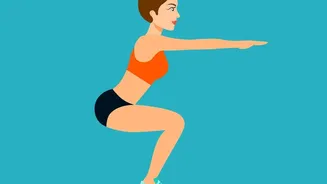
The beauty of bodyweight training is that you can do it anywhere, from a hotel room to a small corner of your living room. Focus on compound movements that work multiple muscle groups simultaneously for maximum efficiency. Key exercises to include are: Squats, to build lower body strength; Push-ups (on your knees or toes), for chest, shoulders, and triceps; Lunges, to target glutes and hamstrings; Planks, to engage your entire core; and Burpees, a full-body exercise that spikes your heart rate for an excellent cardio challenge. These movements provide a comprehensive workout that builds strength, improves stability, and increases endurance without needing a single piece of equipment.
Scheduling for Festive Success
The key to fitting in these short workouts is to schedule them. 'Finding' time is a myth; you must 'make' time. The best approach is to exercise first thing in the morning, before the day’s festive chaos begins. A morning workout energises you for the day and ensures it gets done. If mornings are impossible, look for other windows of opportunity. A quick 15-minute session before getting ready for an evening party or a short walk after a heavy meal can make a huge difference. Put it in your calendar like any other important appointment. Treating your workout as a non-negotiable part of your day, even if it is short, is crucial for staying on track.