





What Exactly Is Space Weather?
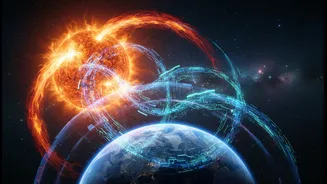
Space weather refers to the changing conditions in space, driven by the Sun's activity. The sun constantly sends out a stream of charged particles called the solar wind. Sometimes, it unleashes more intense events like solar flares (bursts of radiation)
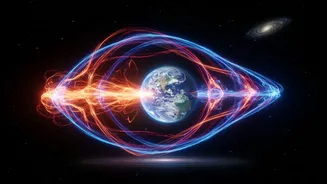
or coronal mass ejections (CMEs), which are massive clouds of solar plasma. When these phenomena interact with Earth’s magnetic field and upper atmosphere, they can have significant effects. These impacts range from creating beautiful auroras to disrupting power grids, satellite communications, GPS navigation, and even posing a risk to astronauts in space. Professionals in this field work to monitor, predict, and mitigate these celestial hazards.
The Foundation: A Deep Dive into Physics
At its core, a career in space weather is built on a strong foundation of physics. Most roles require at least a bachelor's degree in physics, astrophysics, atmospheric science, or a related field, with many researchers and specialists holding master's degrees or PhDs. These professionals, often called space physicists or heliophysicists, study the fundamental processes of the Sun and how its energy and particles travel through space and interact with Earth's systems. Their work involves understanding complex topics like plasma physics, electromagnetic theory, and solar-terrestrial interactions to build the models that are essential for prediction.
The Digital Toolkit: Coding and Data Analysis
Modern space weather forecasting is impossible without advanced computational skills. Professionals in this field don't just understand the physics; they write the code that brings the data to life. Programming languages like Python and MATLAB are essential tools for processing vast datasets from satellites and ground-based observatories. Increasingly, machine learning and artificial intelligence are being used to improve forecasting models. Specialists develop and use sophisticated software to simulate solar events, analyze real-time data streams, and enhance the accuracy of their predictions, making coding a crucial skill for anyone entering the field.
The Art of the Forecast
Similar to terrestrial meteorologists, a key role in this field is that of the space weather forecaster. These experts work in operational centers, often around the clock, to monitor solar activity and issue alerts and warnings. Using data from a host of instruments, they analyze the Sun's behaviour to predict when a solar storm might hit Earth and how severe its impact could be. Their forecasts are critical for a wide range of industries. Aviation authorities use them to reroute polar flights, satellite operators use them to protect their spacecraft, and power grid managers use them to prevent widespread outages. Strong analytical skills and the ability to communicate complex information clearly are vital.
Guarding Our Assets in Orbit
Our modern world is highly dependent on a vast network of satellites for everything from television broadcasts to financial transactions and military operations. These assets are particularly vulnerable to space weather. A significant part of the field involves satellite operations, ensuring these crucial pieces of infrastructure are protected. This can involve putting satellites into a safe mode during a major solar event or adjusting their orbits to mitigate drag from a heated and expanded atmosphere. Engineers and operators with expertise in space systems work closely with forecasters to safeguard these billion-dollar assets from potentially damaging solar radiation and atmospheric changes.
Where Do Space Weather Professionals Work?
Careers in space weather are found across government, military, and private sectors. In the United States, a primary employer is the National Oceanic and Atmospheric Administration's (NOAA) Space Weather Prediction Center (SWPC) in Boulder, Colorado, which serves as the nation's official source for space weather warnings. The military, including the U.S. Space Force and Air Force, also employs forecasters to protect national security assets. Furthermore, NASA requires space weather support for its missions, especially those involving human spaceflight. A growing number of private companies in the aerospace, aviation, and energy sectors are also hiring their own experts to manage the risks space weather poses to their operations.