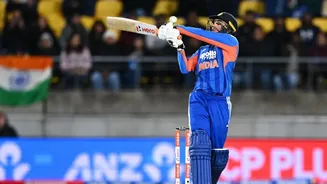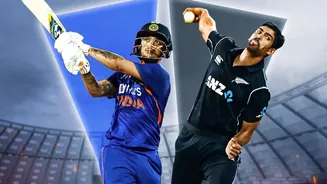







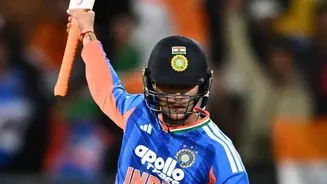

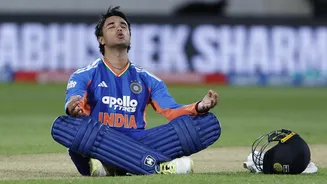
Ishan Kishan is known for his explosive, fearless brand of cricket that can dismantle bowling attacks. But a glaring weakness has emerged in his game: a persistent struggle in SENA countries, brought into sharp focus by a recent failure.
The SENA Conundrum
The numbers don't
lie, and for Ishan Kishan, they tell a troubling tale. In the challenging conditions of South Africa, England, New Zealand, and Australia—collectively known as SENA—his T20 International career has been a shadow of his performances elsewhere. Across 10 innings in these countries, he has scraped together just 177 runs. An average of 17.7 and a strike rate of 118 are figures that belong to a different player than the dynamo fans see in the IPL. A single half-century and a top score of 56 are the only highlights in an otherwise bleak record. This 'SENA problem' is a classic benchmark for batsmen from the subcontinent, as the extra pace, bounce, and swing on offer can expose any technical frailties. For an attacking player like Kishan, the inability to impose himself in these conditions is a significant concern.
A Tale of Two Kishans
The contrast between Kishan's SENA struggles and his dominance in other conditions is stark. In Indian conditions and on other Asian pitches, he is a bona fide match-winner. This is the player who has an ODI double hundred to his name and has lit up the IPL on numerous occasions, using his powerful wrists and exceptional hand-eye coordination to find the boundary at will. Before the current series in New Zealand, he was on the verge of breaking records for the most T20I runs in a calendar year. This duality is what makes his overseas record so perplexing. It suggests the issue is not a lack of talent, but a struggle to adapt his high-risk, high-reward game to environments where the ball does more off the pitch and in the air. The recent three-ball duck against New Zealand only served to magnify this inconsistency and raise the alarm.
Technique, Temperament, or Both?
So, what is the root cause of this performance gap? From a technical standpoint, Kishan's game is built on a foundation of aggressive intent. He often uses a back-and-across trigger movement and a slightly open stance to free his hands and generate power. This works wonders on pitches where he can trust the bounce and hit through the line. However, in SENA, where the ball swings and seams, this same technique can be his undoing. A reliance on hand-eye coordination over precise footwork can lead to dismissals when the ball moves late. There's also the mental aspect; repeated failures in certain conditions can create a psychological hurdle. Indecisiveness can creep in, causing a player to be caught between attacking their natural game and trying to survive, ultimately doing neither effectively.
The Wicketkeeper-Batsman Logjam
This alarming trend couldn't come at a worse time for Kishan, as the competition for the wicketkeeperer batsman role in the Indian T20I side is fiercer than ever. With established names and rising stars all vying for a spot, consistent performance is nonnegotiable. Players like Sanju Samson, who has shown improved consistency, and young prodigies such as Vaibhav Sooryavanshi are constantly knocking on the door. Every failure, especially in high profile overseas tours, weakens Kishan's claim to be the premier choice. The selectors have shown they have other options, and with major tournaments often held in SENA countries, a reliable performer in those conditions is a prized asset. This sustained struggle puts immense pressure on Kishan's place in the starting XI.