


A Frozen Climate Archive
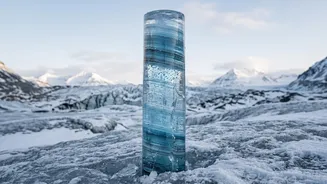
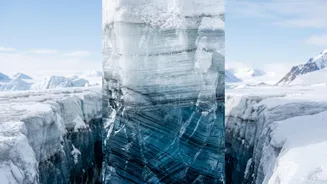
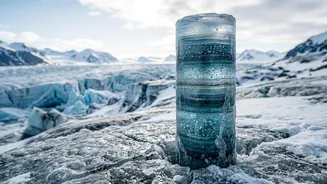
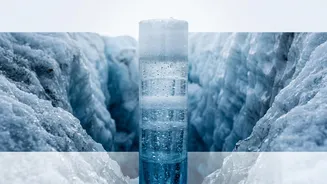
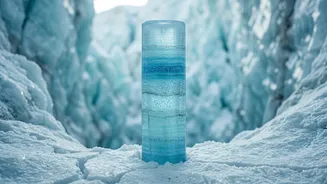
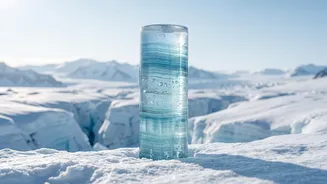
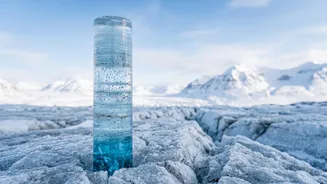
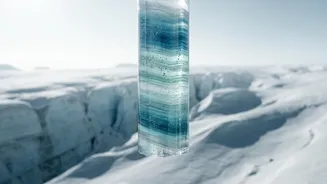
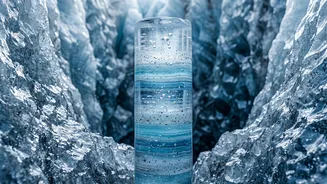
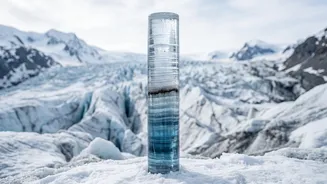
Imagine a library where the books are made of ice, and each page is a year's worth of snowfall. That’s essentially what an ice core is. For hundreds of thousands of years, snow has fallen, burying previous layers. The weight of new snow compresses the old
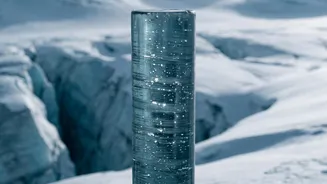
layers into solid ice, creating a continuous, chronological record that can stretch back as far as 800,000 years, and in some cases, even longer. By drilling cylinders of ice, sometimes kilometres long, scientists can physically hold pieces of the past. These cores contain a wealth of information, from trapped air bubbles that reveal the composition of ancient atmospheres to chemical isotopes that act as thermometers for past temperatures. Each layer provides a snapshot of the planet's climate from a specific time.
What's Dust Doing in the Ice?
It may seem strange to find desert dust in the pristine ice of the polar regions, but our atmosphere is a global highway. Wind carries tiny particles of soil, rock, salt, and ash thousands of kilometres from their source. When this airborne dust travels over polar regions, it gets caught in falling snow and becomes trapped in the ice sheet. The amount of dust can vary dramatically. During colder, drier periods in Earth's history, like the last Ice Age, deserts expanded and wind systems were often stronger. This resulted in significantly more dust being transported and deposited in the ice layers. In contrast, warmer and wetter periods generally see less dust in the ice. These layers of dust, sometimes visible to the naked eye, serve as clear markers in the ice core timeline.
Reading the Dusty Fingerprints
The dust itself is a treasure trove of information. Scientists carefully melt sections of the ice core to isolate these particles for analysis. A key part of the investigation involves geochemistry, where they study the chemical makeup of the dust. Just like a package has a return address, the mineral and elemental composition of a dust particle can be traced back to its specific geographic origin. For example, dust from the deserts of Patagonia in South America has a different chemical signature than dust from Australia or Asia. By identifying the 'fingerprint' of the dust in a particular ice layer, scientists can pinpoint where it came from. The size of the particles also tells a story; heavier particles can only be carried by stronger winds, while finer dust can travel much farther on gentler currents.
Mapping Winds of the Past
By combining this information—how much dust is in a layer, where it came from, and the size of the particles—paleoclimatologists can reconstruct ancient atmospheric circulation patterns. For instance, if a 20,000-year-old ice layer in Antarctica contains a large amount of coarse dust with a chemical signature from Patagonia, it tells scientists that strong winds were blowing from South America toward the South Pole at that time. If cores from the same period in Greenland show dust from Asian deserts, it helps build a global map of wind patterns during the Ice Age. These reconstructions have revealed how wind systems shift during major climate transitions, such as the planet moving in and out of glacial periods.
Why Ancient Winds Matter Today
Understanding historic wind patterns isn't just an academic exercise. It is crucial for improving the climate models we use to predict the future. These models are complex computer programs that simulate Earth's climate system. By testing whether a model can accurately replicate the wind patterns of the past (as revealed by ice cores), scientists can build confidence in its ability to forecast future changes. Past climate data provides a real-world test for our understanding of how the atmosphere responds to changes in temperature and greenhouse gas levels. As our planet continues to warm, understanding how atmospheric circulation might change is critical for predicting regional impacts, from the intensity of monsoons in India to drought patterns in other parts of the world.