





The Reality of Air-Purifying Plants
First, let's manage expectations. The idea that a few potted plants can scrub a room's air clean comes from a famous 1989 NASA study. While this study did show that plants can remove harmful volatile organic compounds (VOCs) like formaldehyde and benzene
from the air, the experiments were conducted in small, sealed chambers. In a real home with natural ventilation, the effect is far less dramatic. Research indicates you would need a huge number of plants—up to a thousand per square meter—to replicate the air-cleaning power of a building's natural air exchange. However, that doesn't mean they do nothing. Plants do contribute modestly to filtering pollutants and, more importantly, they boost humidity, improve mood, and make any space feel more alive.
The Unkillable Snake Plant
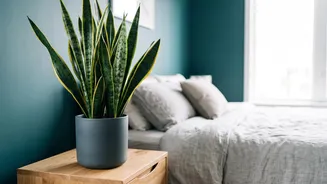
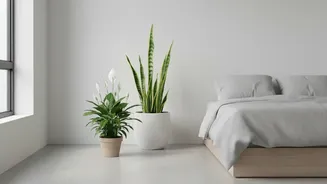
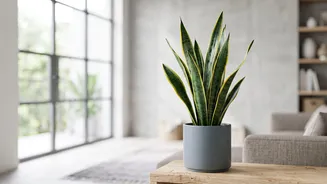
Known in India as a go-to for beginner plant parents, the Snake Plant (Sansevieria trifasciata) is as tough as it is stylish. Its upright, sword-like leaves grow vertically, making it perfect for tight corners in a small bedroom where floor space is precious. It's famously low-maintenance, tolerating low light and infrequent watering. In fact, it thrives on neglect; the most common way to kill it is by overwatering. Allow the soil to dry out completely between waterings, roughly every two to three weeks. As a bonus, it is one of the few plants that release oxygen at night, making it an excellent bedroom companion.
The Resilient ZZ Plant
The Zamioculcas zamiifolia, or ZZ Plant, is another nearly indestructible option for those on a budget or with a busy schedule. Its wide, glossy, dark green leaves bring a touch of the tropics indoors and look incredibly chic. The ZZ plant is highly drought-tolerant because it stores water in its underground rhizomes, meaning it can go for a month or more without water. It's perfectly happy in low-light conditions, which is common in smaller apartments or bedrooms that don't get a lot of sun. While it won't single-handedly purify your room, it is known for being effective at filtering airborne toxins like xylene and benzene.
The Cascading Money Plant (Pothos)
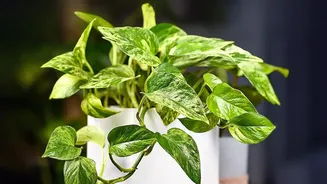
The Money Plant, or Pothos (Epipremnum aureum), is a staple in many Indian households, celebrated for its fast-growing, trailing vines and its reputation for bringing good fortune. It is incredibly easy to care for and adaptable to various light conditions, although it prefers bright, indirect light. For small bedrooms, its versatility is a major plus. You can place it on a high shelf or in a hanging basket to create a beautiful green cascade without taking up any surface space. It's an excellent, budget-friendly choice that effectively filters common household toxins and is very easy to propagate, meaning you can easily create new plants for free.
The Elegant Peace Lily
If you want a plant that offers a bit of floral elegance, the Peace Lily (Spathiphyllum) is a fantastic choice. Known for its beautiful white blooms that rise above glossy green leaves, it is also a top performer in filtering airborne toxins, including ammonia. The Peace Lily thrives in medium to low indirect light and prefers consistently moist soil. It's also a great communicator; the plant will visibly droop when it's thirsty, making it easy for beginners to know when it's time to water. Its compact size makes it suitable for a bedside table or a small desk, bringing both beauty and function to your bedroom.