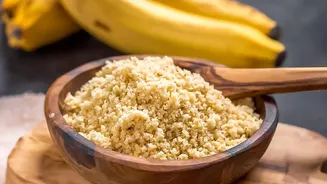






The humble banana is a staple snack, but a quiet debate rages on: which is better for you, green or yellow? The truth is, a banana's ripeness dramatically changes its nutritional profile and how it affects your gut. Let's peel back the layers.
The Case for Green Bananas
Slightly
unripe, green bananas are nutritional powerhouses, primarily due to their high concentration of resistant starch. This type of carbohydrate 'resists' digestion in your small intestine, travelling to the colon intact. Once there, it acts as a potent prebiotic, feeding the beneficial bacteria that make up your gut microbiome. A healthy gut microbiome is crucial for everything from digestion to immune support. This process of feeding good bacteria can improve colon health and may help reduce inflammation. Beyond gut benefits, the resistant starch and another fibre called pectin in green bananas help you feel fuller for longer, which can aid in weight management. They also have a lower glycemic index, meaning they cause a slower, more gradual rise in blood sugar, making them a better choice for individuals managing blood sugar levels.
The Potential Downsides of Going Green
While beneficial, the high resistant starch content in green bananas can come with a trade-off. For some people, especially those not accustomed to a high-fibre diet, the fermentation of this starch by gut bacteria can lead to uncomfortable bloating and gas. It's often recommended to introduce green bananas gradually to allow your digestive system time to adapt. Aesthetically, green bananas are firmer, harder to peel, and have a less sweet, sometimes slightly bitter or waxy taste, which might not be to everyone's liking. They are typically used in savoury cooking, much like a potato, rather than being eaten raw as a snack.
The Allure of Ripe, Yellow Bananas
As a banana ripens, its nutritional story changes. The resistant starch that defined its green phase breaks down and converts into simple sugars like glucose, fructose, and sucrose. This transformation is what gives a ripe banana its characteristic soft texture and sweet flavour. The primary benefit here is digestibility. With less starch to break down, yellow bananas are often gentler on the stomach, making them a good option for children, athletes needing a quick energy source, or anyone with a sensitive digestive system. Furthermore, research suggests that as a banana ripens and develops brown spots, its antioxidant levels increase. These antioxidants help protect your body's cells from damage.
When Ripe Bananas Cause Trouble
Despite being easier to digest for many, ripe bananas can be problematic for a specific group of people, particularly those with Irritable Bowel Syndrome (IBS). As bananas ripen, they accumulate a type of carbohydrate known as a FODMAP (Fermentable Oligosaccharides, Disaccharides, Monosaccharides, and Polyols). Specifically, ripe bananas become higher in fructans, which can trigger symptoms like bloating, gas, and stomach pain in individuals sensitive to them. According to Monash University, which developed the low-FODMAP diet, firm yellow bananas are generally considered low-FODMAP, but as they ripen and develop brown spots, they move into the high-FODMAP category. For this reason, those with IBS are often advised to choose less ripe bananas to avoid triggering symptoms.
The Verdict: Which Banana Is Best?
Ultimately, the 'best' banana depends entirely on your personal health goals and digestive tolerance. There is no single winner. If your focus is on nurturing your gut microbiome with prebiotics and maintaining stable blood sugar, a greener banana is the superior choice. Its high resistant starch content provides significant benefits for gut flora and metabolic health. If you need a quick, easily digestible source of energy before a workout or have a sensitive stomach that doesn't tolerate a lot of fibre, a ripe yellow banana is the way to go. The key is to listen to your body. If one type causes you discomfort, simply opt for the other.