







A Match Made in Pastry Heaven
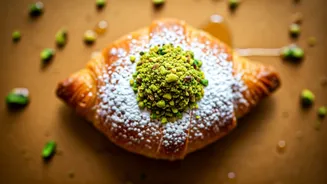
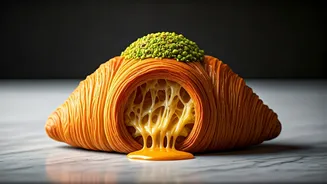
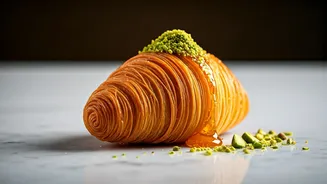
First, let's break down this masterpiece of fusion cuisine. The kunafa stuffed croissant, or ‘kunafeh croissant’, is exactly what it sounds like: a glorious hybrid of two beloved desserts from different corners of the world. At its heart is a classic,
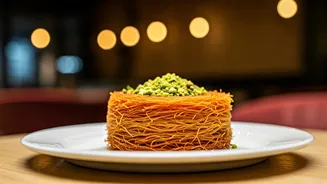
crescent-shaped croissant, known for its light, airy texture and rich, buttery taste. But the magic happens inside. Instead of a simple chocolate or almond filling, bakers are stuffing these pastries with the traditional components of kunafa: a sweet, stretchy cheese like Akkawi or a rich cream, sometimes mixed with nuts. The croissant is then often baked with a crown of kataifi—the fine, shredded pastry used for kunafa's signature crunchy topping—and finished with a generous soak of sugar syrup and a sprinkle of crushed pistachios. The result is a textural wonderland: the soft, yielding croissant gives way to a warm, gooey centre, all contrasted by the delightful crunch of the topping. It's sweet, savoury, creamy, and crispy all in one bite.
The Anatomy of a Viral Trend
This innovative pastry didn't appear out of nowhere. It's part of a larger global phenomenon of 'viral' croissants that have been taking social media by storm for years. The trend arguably kicked off with the Cronut (a croissant-doughnut hybrid) in New York City over a decade ago. Since then, we’ve seen a wave of creative reinventions, from the 'crookie' (a croissant stuffed with cookie dough) that went viral in Paris to the 'croffle' (a croissant pressed in a waffle iron). The kunafa croissant is India’s answer to this global movement, localising the trend by infusing a familiar Western pastry with the beloved flavours of the Middle East, which have long held a special place in the Indian culinary landscape. Its photogenic nature—the golden pastry, the vibrant green pistachios, the tantalising 'cheese pull'—makes it an instant star on Instagram feeds, further fuelling its popularity.
East Meets West on a Plate
The croissant itself is a symbol of French patisserie, though its origins trace back to the kipferl from Vienna, Austria. Kunafa, on the other hand, is a dessert with deep roots in the Levant and across the Middle East, with countless regional variations. Bringing them together is more than just a clever gimmick; it’s a reflection of our increasingly globalised palates. Indian consumers, particularly in metropolitan cities, are more adventurous than ever. They travel widely, consume global media, and actively seek out new and exciting culinary experiences. This croissant perfectly caters to that desire, offering something that is at once novel and comforting. It blends the technical precision of French baking with the rustic, soulful flavours of Middle Eastern comfort food, creating a product that feels both sophisticated and deeply satisfying.
Why It's Taking Over Indian Cities
While you may not find it in every neighbourhood bakery just yet, the kunafa croissant is making significant waves in the artisanal bakeries and upscale cafes of cities like Delhi, Mumbai, and Bengaluru. Establishments known for their high-quality baking have been quick to adopt the trend, often selling out within hours. This surge speaks to a broader shift in the Indian dessert scene. For years, the choice was often between traditional Indian mithai or classic Western-style cakes and pastries. Now, there's a growing demand for a middle ground: innovative desserts that break the old rules. This pastry fits the bill perfectly. It's less intensely sweet than many traditional Indian sweets but more complex and interesting than a plain croissant. It offers a complete sensory experience, making it feel like an event rather than just a snack, and justifying its premium price point in the eyes of discerning customers.