



More Than Just a Stroll
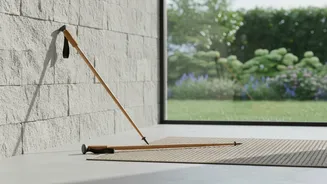
Imagine cross-country skiing, but without the skis or snow. That, in essence, is Nordic walking. It’s an enhanced walking technique that uses specially designed poles to engage the upper body with every stride. Unlike regular walking, which primarily
uses muscles below the waist, Nordic walking turns a simple stroll into a full-body workout. By planting the poles and pushing off, you activate muscles in your arms, shoulders, chest, and core. This transforms the activity from a lower-body exercise into one that engages between 80% and 90% of your body's muscles. The technique originated in Finland as a way for cross-country skiers to train during the summer months but has since grown into a global fitness movement.
Why the Comeback Now?
The resurgence of Nordic walking isn't accidental. It represents a broader shift towards sustainable and accessible fitness. In an era saturated with high-intensity interval training (HIIT) that can be punishing on the body, Nordic walking offers a highly effective yet low-impact alternative. The poles help distribute weight and reduce stress on the joints, particularly the knees and hips, making it ideal for people of all ages and fitness levels. It's also beneficial for those with balance concerns, as the poles provide extra stability. This accessibility, combined with its effectiveness, makes it an appealing option for those seeking long-term health benefits without the risk of injury or burnout associated with more aggressive forms of exercise.
The Science-Backed Benefits
The case for Nordic walking is supported by compelling evidence. Research shows it can burn significantly more calories—estimates range from 18% to 67% more—than regular walking, without necessarily feeling harder. This is because engaging the upper body increases your heart rate more than conventional walking, boosting cardiovascular fitness. Studies have linked Nordic walking to a host of health improvements, including reductions in 'bad' LDL cholesterol, depression, and chronic pain, while increasing 'good' HDL cholesterol, endurance, and overall quality of life. One study highlighted that while various exercises offer benefits, Nordic walking provided the best well-rounded results by improving upper-body strength, cardiovascular fitness, and flexibility simultaneously.
Rethinking 'Gradual Pace'
For years, fitness advice has often presented a binary choice: either a slow, gradual pace for safety and endurance or high intensity for maximum results. Nordic walking disrupts this dichotomy. It proves that you can achieve a higher metabolic output and greater muscle engagement without the high impact or perceived exertion of running or HIIT. It redefines the idea of a 'gradual pace' by adding intensity through technique rather than just speed. You are still walking, but the full-body engagement means you are working significantly harder and more efficiently. This makes it a powerful middle-ground, offering a workout that is both challenging and sustainable, building fitness progressively without demanding jarring, explosive movements.
Finding Your Stride
Getting started is relatively simple, but proper technique is key to unlocking the full benefits. The basic movement involves walking with your arms and legs in opposition—as your right leg steps forward, your left arm plants its pole, and vice-versa. The poles should be angled backward, and you push off actively to propel yourself forward. While it might feel awkward initially, the rhythmic motion quickly becomes natural. Many experts recommend joining a club or taking a lesson from a qualified instructor to learn the correct form. This ensures you engage the right muscles and get the most effective workout, turning every walk into an opportunity for comprehensive fitness.