








A Second Home for the King
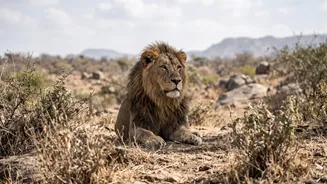
The return of the Asiatic lion to Barda Wildlife Sanctuary is a story more than four decades in the making. For years, conservationists and government bodies have sought to establish a second, geographically separate home for the lions, whose entire wild
population is concentrated in and around Gir National Park. This 'all eggs in one basket' scenario poses a significant risk; a single disease outbreak, like the canine distemper virus that has struck in the past, could be catastrophic for the species. Barda, located about 100 kilometres from Gir, was identified as a promising candidate. The process began naturally in January 2023, when a sub-adult male lion dispersed from the Gir landscape and entered Barda on its own. This pioneering move was followed by the Gujarat Forest Department's introduction of five females to help establish a new population.
Early Days and First Observations
To understand how these pioneers were adapting, researchers launched a study, recently published in the journal 'PLOS One', titled 'Beyond Gir: Barda Wildlife Sanctuary as a Potential Stronghold for Asiatic Lions'. The team radio-collared six lions—the original male and the five translocated females—and meticulously tracked their movements, habitat use, and social lives between January 2023 and July 2025. The data, comprising over 169,000 GPS locations, showed the lions were not just surviving but actively establishing home ranges, with the average range spanning about 70 square kilometres. Dietary analysis from their scat revealed they were primarily preying on wild animals, with wild pig being a staple, supplemented by some domestic cattle. By October 2026, the population in Barda had grown to 17 lions, including adults and cubs, a promising sign of successful establishment.
Why Small Studies Have Big Limits
The headline findings are undoubtedly positive, suggesting Barda has the right ingredients to support a long-term lion population. However, the study's own authors acknowledge its limitations, which are inherent in any research based on a small and newly established population. The entire study is based on the behaviour of just six radio-collared individuals. While the data collected is extensive, six lions represent a tiny fraction of a viable population. Their behaviours might not be representative of how a larger, more established pride structure would function. For instance, the lone male's territory size may be different simply because he faces no competition from other males. Furthermore, the study period, while over two years, is still a snapshot in the life of a long-lived animal. It captures the initial adaptation phase, where behaviour can be influenced by the stress of relocation and the novelty of the environment. Long-term patterns, especially concerning breeding success and generational dynamics, can only emerge over a much longer period. As one expert noted in a similar context, it is too early to definitively call Barda a second home just yet.
The Bigger Conservation Picture
Despite these scientific caveats, the developments at Barda are a huge step forward for Project Lion, India's national conservation strategy for the species. The project aims to create a network of satellite habitats to support the growing numbers of lions dispersing from an increasingly crowded Gir. The fact that a lion could naturally reach Barda underscores the importance of maintaining wildlife corridors between protected areas. To support the new inhabitants, the Forest Department has been actively managing the sanctuary, including augmenting the prey base. Since 2007, hundreds of spotted deer (chital) and sambar have been released into Barda to ensure the lions have enough wild prey, reducing potential conflict with local pastoral communities and their livestock. The government has also restructured the local forest division to enhance patrolling and management, dedicating more resources to ensure the lions' safety.
What Comes Next for Barda's Lions
The journey for Barda's lions is just beginning. The initial study provides a crucial baseline, a scientific foundation upon which future research will be built. Conservation is a science of patience, and the limits of this first study are not a failure but a roadmap for what needs to be monitored next. Researchers will need to track the population's growth, genetic diversity, and long-term survival rates of cubs. Continued monitoring of their diet is essential to see if their reliance on wild prey increases as the augmented prey base becomes more established. The ultimate goal, as identified by the Wildlife Institute of India, is for Barda to support a population of around 40 lions. Reaching that number will require sustained effort in habitat management, prey augmentation, and community engagement to ensure humans and lions can coexist in this new chapter for the species.