



An Inhospitable World
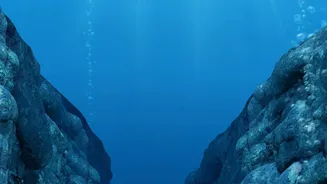
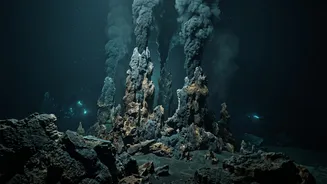
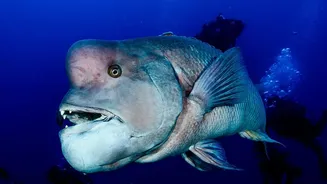
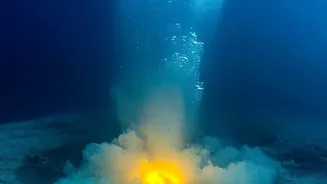
Imagine an environment where the pressure is hundreds of times greater than at sea level and the temperature hovers just above freezing. This is the reality for organisms living in the deep sea. For most life forms, these conditions are instantly lethal.
High pressure can compress and distort the delicate three-dimensional shapes of proteins, including enzymes, rendering them useless. Low temperatures slow down all chemical reactions, grinding metabolism to a halt. Normal enzymes become too rigid to function effectively in the cold. So how do deep-sea creatures, from microbes to fish, manage to survive and thrive against such overwhelming physical odds?
The Secret is in the Structure
The answer lies in molecular evolution. Organisms living in these extreme conditions, known as extremophiles, have evolved specialised enzymes. There are two main types relevant here: psychrophiles (cold-loving) and piezophiles (pressure-loving). Many deep-sea organisms are both. Their enzymes are not just slightly different; they are fundamentally re-engineered to work in conditions that would destroy ours. These adaptations primarily focus on maintaining the enzyme's flexibility and stability. An enzyme's function depends entirely on its specific 3D shape, which allows it to bind to its target molecule. Extreme cold and pressure are a direct assault on this shape.
Adapting to the Cold
To counteract the stiffening effect of cold, enzymes in psychrophiles have a more flexible structure compared to their counterparts from warmer environments. They often have a higher proportion of α-helix structures over more rigid β-sheets, which helps maintain mobility. This increased flexibility allows the enzyme's active site—the part that does the chemical work—to continue its catalytic dance even at near-zero temperatures. The trade-off for this wonderful cold-weather performance is that these enzymes are often much less stable at moderate temperatures. They can lose their shape and stop working at temperatures we would consider normal or cool.
Withstanding the Pressure
Pressure adaptation in piezophiles is a different challenge. Immense pressure can crush an enzyme, eliminating the tiny internal cavities and movements necessary for its function. Piezophilic enzymes combat this by having more compact and stable structures that resist compression. They have fewer internal voids and stronger bonds holding them together. In a fascinating twist, some of these enzymes don't just tolerate high pressure—they require it. The pressure helps lock them into their correct, functional shape. To maintain fluidity in their cell membranes, which would otherwise become rigid like cold butter, these organisms also incorporate a higher amount of unsaturated fatty acids, which prevent tight packing.
From the Ocean Depths to Industry
Studying these 'extremozymes' is not just an academic exercise; it has huge biotechnological potential. Cold-active enzymes are a goldmine for industries looking to save energy. Imagine washing your clothes in cold water with detergents that work just as effectively as those needing hot water, thanks to cold-adapted proteases and lipases. This could significantly reduce energy consumption. In the food industry, these enzymes can process heat-sensitive products at low temperatures, preserving flavour and nutritional value. Pressure-stable enzymes, meanwhile, are being explored for use in high-pressure food processing and other industrial biocatalysis where robust and stable enzymes are essential. These tiny marvels of evolution could form the basis of a new generation of greener, more efficient industrial processes.