







The Cloud's Growing Shadow
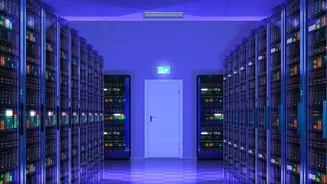
They are the invisible engines of the modern internet: vast, windowless buildings packed with powerful servers that store our data, stream our movies, and now, train artificial intelligence. These 'hyperscale' data centers are being built at a frantic
pace across the United States. But their explosive growth comes with a significant environmental cost. A recent Harvard University study published in Nature Sustainability found that just 403 of these massive facilities emitted about 25.7 million metric tons of carbon dioxide in the year leading up to April 2025. That's an emissions footprint comparable to the entire country of Denmark and represents a two- to three-fold increase from 2018 levels. This surge in energy consumption and pollution is no longer going unnoticed.
AI: The Great Energy Accelerator
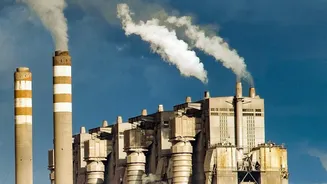
The primary driver behind this insatiable demand for power is the artificial intelligence revolution. Training and running complex AI models requires immense computational power, which in turn consumes huge amounts of electricity. AI servers are vastly more power-intensive than traditional ones, and their share of data center power consumption is soaring. The International Energy Agency (IEA) has noted that AI workloads are the dominant growth driver for data centers globally. This has created a difficult situation for tech giants, whose electricity consumption rose 240% between 2022 and 2025. These companies have made ambitious climate pledges, but the energy demands of the AI boom are making those goals harder to reach, forcing a greater reliance on fossil fuels. The Harvard study found that over half the power for the data centers it analyzed came from sources like natural gas and coal.
A New Wave of Bipartisan Scrutiny
The environmental impact is now a flashpoint for a surprisingly broad coalition of opposition. Local communities in states like Virginia, Ohio, and Tennessee are increasingly pushing back against new data center projects, citing concerns over noise, strained water resources, and rising electricity bills for residents. From January 2024 to May 2026, community opposition contributed to the delay or cancellation of at least 46 data center projects worth a total of $170 billion. This resistance is notably bipartisan, uniting citizens and politicians who may disagree on other issues but share concerns about the local impact of these facilities. This local pressure is complemented by a shift at the state regulatory level. After years of offering tax incentives to attract data centers, states like Washington and Oregon are now advancing policies that would require these facilities to pay for the grid upgrades they necessitate.
Big Tech's Dilemma and the Search for Solutions
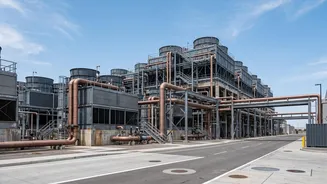
For the tech companies at the heart of the AI boom, this presents a significant challenge. They are caught between the race for AI dominance and their own public commitments to sustainability. The growing backlash and regulatory shifts threaten to slow development and increase costs. In response, the industry is exploring a range of solutions. These include building data centers closer to renewable energy sources, investing in more efficient technologies like liquid cooling, and signing large-scale power purchase agreements (PPAs) to fund new wind and solar projects. However, the pace of AI growth is currently outstripping the speed at which the energy grid can be decarbonized. Even with significant investment in renewables, a substantial carbon footprint is projected to remain, putting pressure on companies to find more innovative and immediate ways to mitigate their impact.