


Why Enrichment Matters More Than You Think
Before we dive into the games, it's important to understand what enrichment truly is. It's not just about keeping your dog busy; it's about providing mental and physical activities that allow them to express natural behaviours like sniffing, chewing,
and problem-solving. Studies show that good enrichment reduces stress, prevents destructive behaviour, and builds a dog's confidence. Many experts agree that just 15 minutes of focused brain work, like a scent game, can be more tiring and satisfying for a dog than a 30-minute walk. So when you can't go out, you can still provide a fantastic workout by going inwards.
Turn Mealtime into a Brain Game
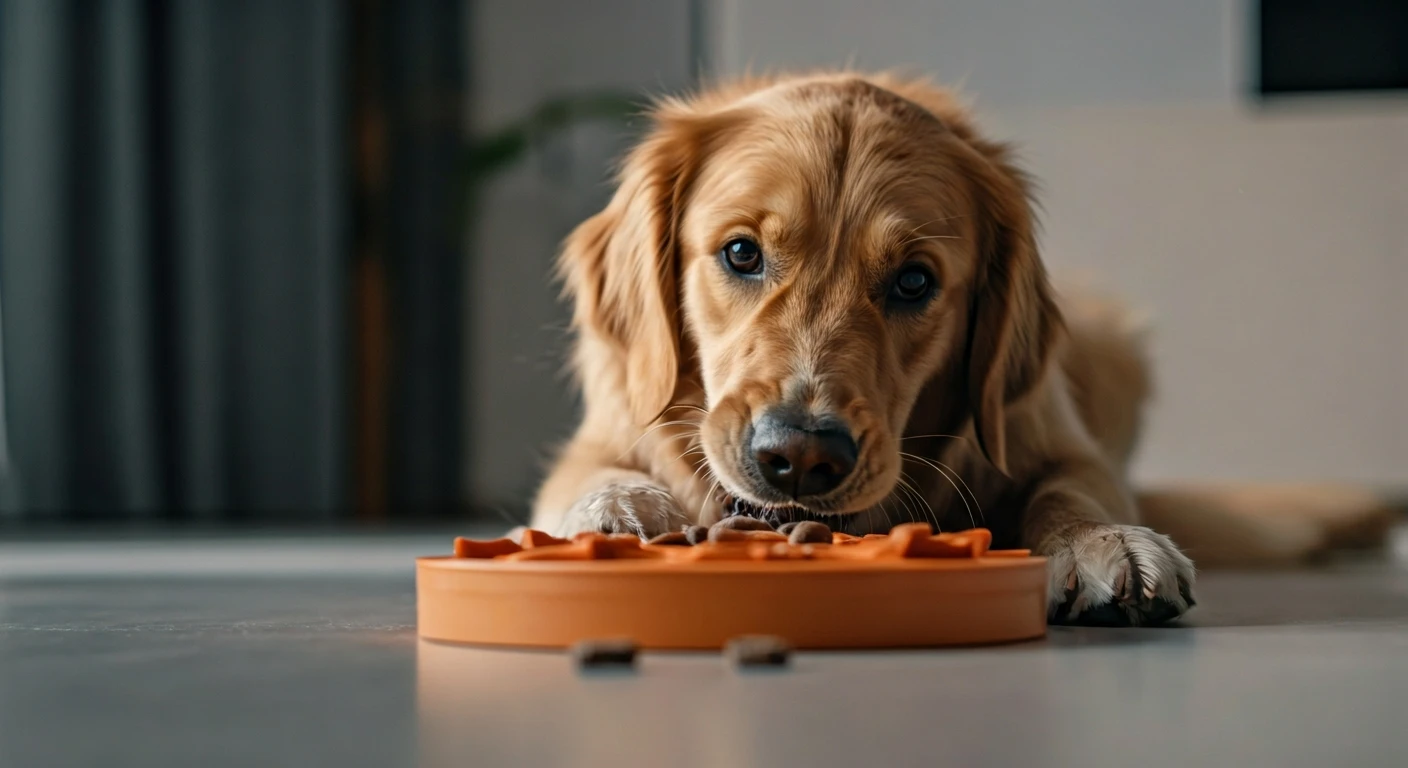
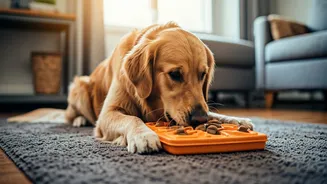
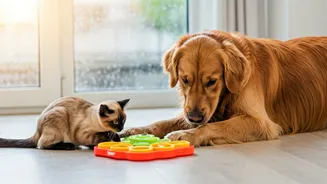
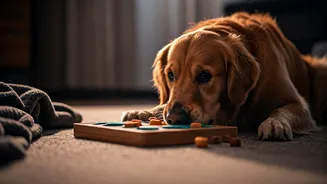
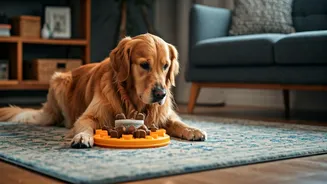
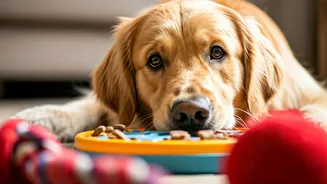
Instead of serving your dog's food in a bowl, which is often gone in seconds, use mealtime as a prime opportunity for enrichment. One of the easiest methods is scatter feeding: simply toss their kibble around a room and let them use their powerful nose to hunt for every piece. For a more structured challenge, try the muffin tin game. Place kibble in the cups of a muffin tin and cover each one with a tennis ball or other small toy. Your dog will have to figure out how to remove the balls to get their reward, engaging their problem-solving skills.
Get Creative with DIY Puzzle Toys
You don't need to spend a lot of money on fancy toys. Your recycling bin is a treasure trove of enrichment opportunities. Take an empty paper towel or toilet paper roll, place some treats inside, and fold the ends. Your dog will have a great time ripping and tearing the cardboard to get to the goodies. Another fantastic option is a "destruction box." Grab a cardboard box and fill it with crumpled newspaper, empty plastic bottles (lids and rings removed), and other safe-to-shred items. Sprinkle treats or kibble inside and let your dog dig, forage, and shred to their heart's content.
Master the Art of 'Find It'
Scent games are incredibly stimulating for dogs, as their sense of smell is their primary way of experiencing the world. The "Find It" game is a simple but effective way to harness this. Start by having your dog wait in another room. Hide a few high-value treats around your living room — start with easy, visible spots. Then, release your dog and enthusiastically say, "Find it!" As they get the hang of it, you can hide the treats in more challenging locations, like under a cushion or behind a table leg. This simple game provides a huge mental payoff.
Build a Living Room Obstacle Course
You can create a fun and engaging agility course using everyday household items. Drape a sheet over two chairs to make a tunnel. Lay a broomstick across a pair of low stools for them to step over. Use pillows and cushions for them to climb on or weave through. The goal isn't to replicate a professional course, but to encourage your dog to move their body in new ways and build confidence navigating different objects and textures. Guide them through it with praise and treats, keeping it light and fun.
Teach an Old (or Young) Dog a New Trick
A rainy day is the perfect opportunity for a short, fun training session. Training is a fantastic form of mental exercise that also strengthens your bond. You can work on refining basic commands like 'stay' or 'come', or teach something new and fun like 'spin', 'shake hands', or 'roll over'. Keep sessions short—around 5 to 10 minutes—to hold their attention and always end on a positive note when they succeed. This focused interaction is a powerful way to burn mental energy.