




The Old Gamble of Monsoon Travel
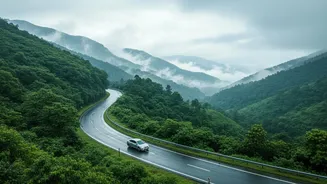
For generations, a monsoon road trip in India has been a bit of a gamble. While the rains bring breathtaking beauty to the countryside, they also bring treacherous road conditions, flash floods, and landslides. Travellers have traditionally relied on broad,
city-wide forecasts and local hearsay, often finding themselves stranded by a washed-out road or a suddenly swollen river that wasn't part of the original plan. Recent events underscore these risks; since July 2026, floods and landslides have led to numerous fatalities across states like Assam and Kerala, with thousands displaced and infrastructure severely damaged. These incidents highlight a grim reality: the weather at your destination is only half the story. The real danger often lies in the journey itself.
A New Toolkit: Hyperlocal Warnings
The India Meteorological Department (IMD) has significantly upgraded its forecasting capabilities, moving beyond generalised city-based predictions. The game-changer is the provision of district-level and even route-specific warnings, accessible to anyone with a smartphone. Through its MAUSAM app and web-based platforms, the IMD now provides detailed five-day forecasts and warnings for individual districts. This granular data allows travellers to see not just what the weather will be like at their destination, but across every district they plan to pass through. The IMD even offers a highway forecast tool that overlays weather alerts directly onto the national highway network, making it possible to visualise potential hazards along a specific route.
How to Read the Signs: Decoding IMD Alerts
Understanding the IMD's colour-coded system is key to using this information effectively. The alerts, issued for districts, are simple and intuitive. A 'Green' alert means no advisory is needed. A 'Yellow' alert advises you to be aware, suggesting moderate rainfall that could disrupt activities. An 'Orange' alert means 'Be Prepared,' indicating a forecast of heavy rainfall that could lead to transport disruptions and waterlogging. A 'Red' alert is the highest level, meaning 'Take Action.' It warns of extremely heavy rainfall that poses a significant threat to life and property, often accompanied by instructions to avoid travel. These warnings are available on the MAUSAM app, which provides forecasts for hundreds of cities and three-hourly 'nowcasts' for localised weather events.
Planning Your Journey, Not Just the Destination
The availability of this data demands a shift in mindset. Instead of just checking the weather for your holiday spot, proactive travellers should now map their entire route and check the district-wise warnings for each leg of the journey. For instance, if you are driving from Mumbai to Goa, you are passing through multiple districts like Thane, Raigad, Ratnagiri, and Sindhudurg. A 'Green' alert in Goa is meaningless if Ratnagiri is under a 'Red' alert for landslides. By checking the IMD's district warnings or its highway forecast tool before you leave, you can anticipate which sections of your drive might be hazardous. This allows you to make informed decisions: delay your departure, alter your route, or build in extra time to avoid travelling through a high-risk area during the peak of a weather event.
Technology Is a Tool, Not a Guarantee
While IMD's tools are powerful, they are not a replacement for common sense and on-the-ground diligence. Always supplement digital forecasts with practical measures. Before a long drive, ensure your vehicle is in top condition, with healthy tires, brakes, and wipers. Pack an emergency kit with a first-aid box, torch, extra food, and water. During the journey, drive cautiously on wet roads and never attempt to cross a flooded area, as it's impossible to gauge water depth or road damage underneath. If you are travelling in hilly regions, pay attention to local announcements and be prepared for plans to change. The most sophisticated forecast is a guide, but the final decision to proceed safely rests with the traveller. Combining advanced warnings with sensible precautions is the new standard for safe monsoon travel.