






A Partnership Forged in Ambition
When the Tata Group consolidated its aviation assets by merging Air India with Vistara, it was a landmark moment for Indian aviation. The deal, completed in November 2024, brought Singapore Airlines into the fold as a formidable partner. By rolling its 49%
stake in Vistara into the new entity, SIA acquired a 25.1% shareholding in the enlarged Air India group. This wasn't just a financial transaction; it was a strategic masterstroke. For SIA, it provided a significant foothold in one of the world's fastest-growing aviation markets. For the Tata Group, it brought on board a partner with a global reputation for excellence. The goal was to create a dominant full-service carrier, leveraging Vistara's strong service record and Air India's vast network. But this ambition came with a hefty price tag, and the bill is now coming due.
The High Cost of Transformation
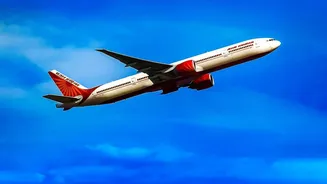
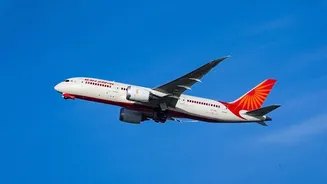
Reviving a legacy airline is a monumental task. Air India's transformation, codenamed 'Vihaan.AI', is a five-year plan involving a top-to-bottom overhaul. This includes massive investments in new aircraft, with a record-setting order for 470 jets; a USD 400 million commitment to refurbish old cabins; and a USD 200 million spend on upgrading IT systems. These essential expenditures are the primary drivers of the airline's current financial state. For the first half of the 2027 fiscal year (ending September 30, 2026), Air India is estimated to have incurred losses of around ₹10,500 crore to ₹10,800 crore. While this represents a reduction from the roughly ₹12,500 crore loss in the same period last year, the figures remain substantial and highlight the immense cash burn required for the turnaround. The airline's consolidated loss for the full prior fiscal year (FY26) was a staggering ₹22,238 crore, more than double the previous year.
The Ripple Effect on Singapore Airlines
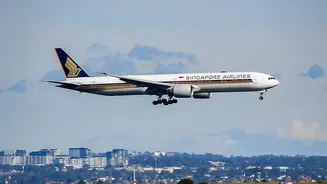
Air India's losses are not just an Indian story; they have a direct and tangible impact on Singapore Airlines' bottom line. Due to accounting rules, SIA must recognise its 25.1% share of Air India's losses in its own financial statements. For the first half of FY27, this amounted to a loss of S$361.7 million (around ₹2,640 crore) for SIA. This financial drag contributed to SIA's own net profit for the half-year falling by 43.9% to S$134 million, alongside other pressures like soaring jet fuel prices. The investment's book value has also taken a hit, falling from S$1.1 billion in March 2026 to just under S$800 million by the end of September 2026, a decline of over S$334 million in six months. While the reduction in Air India's losses compared to the previous year provided a slight cushion, the overall impact remains a significant test of financial patience for SIA's shareholders.
A Long-Term Bet on India's Skies
Despite the short-term financial pain, both Singapore Airlines and the Tata Group are publicly framing this as a long-haul journey. In its recent financial results announcement, SIA reiterated that it recognises 'that a transformation of this scale will take time'. The company continues to describe the investment as a key pillar of its multi-hub strategy, securing its future in the lucrative Indian market. There are early signs of progress, with SIA noting improvements in Air India's customer experience and operational performance. Commercial collaborations are also deepening, with the first phase of joint initiatives launching in October 2026 to offer more flight options and reciprocal frequent flyer benefits. Tata Sons Chairman N. Chandrasekaran has even reframed the turnaround timeline from five years to a more realistic five-to-ten years, signalling a commitment to seeing the project through despite the steep initial costs.