


A New Space Race Begins at Home
India's space story is undergoing a dramatic transformation. What was once the exclusive domain of the Indian Space Research Organisation (ISRO) is now a bustling commercial sector, teeming with ambitious startups. The catalyst for this change was a series
of landmark government reforms in 2020, which effectively opened the final frontier to private enterprise. The goal was to unlock the nation's immense potential and grow its share of the global space economy from around 2% to a much larger slice of the multi-billion dollar pie. This policy shift led to the creation of the Indian National Space Promotion and Authorisation Centre (IN-SPACe) in June 2020. Functioning as a single-window agency, IN-SPACe is designed to promote, authorise, and supervise the activities of private space companies, turning a government-led program into a public-private partnership. As of 2026, the results are clear: from just a handful of companies a decade ago, India is now home to over 400 space startups.
The Rocket Builders: Cheaper, Faster, Stronger
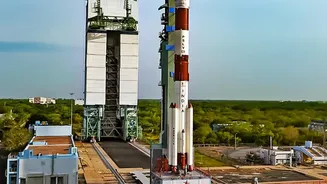
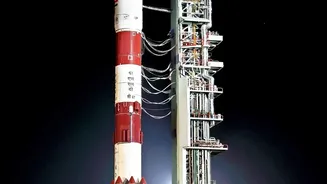
At the forefront of this boom are companies building the vehicles to take us to orbit. Hyderabad-based Skyroot Aerospace made history by becoming the first Indian private company to launch a rocket into orbit with its Vikram-1 vehicle. This milestone placed India in an elite club of nations with private orbital launch capabilities, alongside the US and China. Another key player, Chennai's Agnikul Cosmos, has pioneered the use of advanced manufacturing. The company successfully launched its sub-orbital technology demonstrator, powered by the world's first single-piece 3D-printed rocket engine. This innovation drastically cuts down production time and costs, with the potential to build a launch vehicle in a matter of weeks. Both companies are focused on the burgeoning market for small satellite launches, offering dedicated, on-demand services that were previously unavailable.
Eyes in the Sky: Satellites as a Service
The boom isn't just about launch vehicles. A new generation of startups is focused on what happens in orbit. Pixxel is a leader in this area, deploying a constellation of the world's highest-resolution hyperspectral imaging satellites. These satellites can see the Earth in hundreds of wavelengths, providing data that is invisible to the naked eye. This has revolutionary applications in agriculture, climate monitoring, and environmental protection. For example, their technology can detect crop diseases, monitor water pollution, and identify gas leaks with incredible precision. Meanwhile, companies like Dhruva Space are building the infrastructure for the new space economy. Founded in 2012, the Hyderabad-based firm offers full-stack space engineering solutions, including building satellite platforms, ground station services, and launch deployers. This 'satellite-as-a-service' model allows other companies to focus on their applications without having to build their own hardware from scratch.
The Government's Guiding Hand
This startup explosion wasn't accidental; it was by design. The creation of IN-SPACe has been a game-changer, acting as a bridge between ISRO's decades of experience and the private sector's agility. IN-SPACe doesn't just grant authorisations; it actively facilitates growth by providing startups with access to ISRO's world-class testing facilities, infrastructure, and technical expertise. This support de-risks development and allows young companies to stand on the shoulders of giants. The Indian Space Policy 2023 further clarified the roles, designating ISRO to focus on research and development for advanced science and exploration missions, while commercial activities are transferred to the private sector. This framework ensures a collaborative rather than competitive environment, fostering a robust and self-reliant space ecosystem.
Challenges on the Launchpad
Despite the incredible momentum, the path ahead is not without its challenges. The space industry is capital-intensive and high-risk. While funding has increased significantly in recent years, Indian startups still require substantial investment to scale their operations and compete with global giants like SpaceX. Building reliable, reusable rocket technology, as Agnikul is attempting, requires immense investment in testing and infrastructure. Furthermore, as more satellites are launched, ensuring safe and sustainable operations in an increasingly crowded orbital environment is a growing concern. Regulatory frameworks must continue to evolve to manage space traffic and mitigate debris, ensuring the long-term viability of India's space ambitions.