
Our Dazzling Neighbour
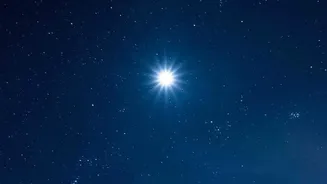
Throughout September, Venus will dominate the western sky after sunset, shining more brilliantly than any other star or planet. In fact, around the middle of the month, it reaches its peak brightness for the entire year, attaining a dazzling magnitude
of -4.8. This exceptional brightness is why it’s often the first point of light to appear in the evening, earning its famous nickname. Unlike stars that twinkle, Venus shines with a steady, silvery light, making it easy to distinguish. This month offers a fantastic opportunity to observe it, but its viewing window is brief. The planet follows the sun below the horizon relatively quickly, so timing is key. Early in September, it sets about an hour and a half after the sun, but by the end of the month, that window shrinks to only about 30 minutes.
When and Where to Look
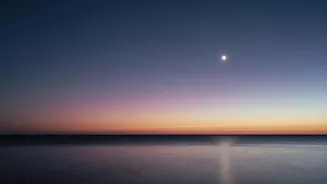
Your best chance to see Venus is in the 30-to-60-minute window immediately following sunset. Face west, the same direction the sun just set. As the sky deepens from orange to indigo, Venus will emerge as a brilliant beacon. Because it will be quite low, a clear, unobstructed view of the western horizon is essential. Trees, hills, or buildings can easily block the view. At the start of the month, the planet will be about 10 degrees above the horizon 30 minutes after sunset—roughly the width of your fist held at arm's length. By the end of September, it will be much lower, making it a more challenging but rewarding sight. For those in India, September marks the clearing of post-monsoon skies, providing better viewing conditions, especially later in the month. Sunset in major Indian cities like Delhi and Mumbai occurs between 6:40 PM and 6:55 PM IST early in the month, shifting to around 6:10 PM to 6:30 PM by month's end.
Special Events in the Sky
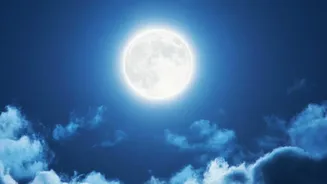
September offers a couple of noteworthy celestial meet-ups involving Venus. On September 2nd and 3rd, Venus will appear very close to the bright star Spica, the leading light of the constellation Virgo. This pairing will be low in the twilight glow, presenting a beautiful contrast between the brilliant planet and the bluish star. The most anticipated event occurs on the evening of September 14th, when a slender waxing crescent Moon will pass very close to Venus. The sight of the delicate crescent hanging near the dazzling planet will make for a stunning photo opportunity and an easy-to-spot spectacle just after sunset. For viewers in much of Asia, the Moon will actually pass in front of Venus in an event called an occultation, though this will occur during daylight hours.
Tips for the Best View
You don’t need any special equipment to enjoy the sight of Venus; its brilliance is easily visible to the naked eye, even from brightly lit cities. However, for an enhanced experience, a few simple tips can help. First, find a spot with an unobstructed western horizon. City parks, waterfronts, or even an upper-floor balcony can work well. Give your eyes about 15-20 minutes to adjust to the darkness away from bright screens or lights. While a telescope isn't necessary, if you have a pair of binoculars, you might be able to observe that Venus has a phase, just like our Moon. This month, as it gets closer to Earth, it will appear as a slim crescent through optical aid. Finally, consider using a stargazing app on your smartphone. These apps can use your location to show you exactly where to look and help you identify other celestial objects nearby.