






The Science of Living Light
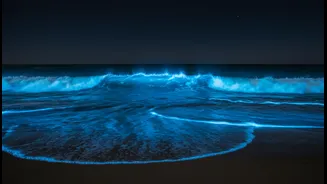
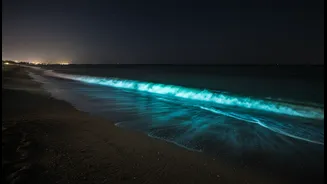
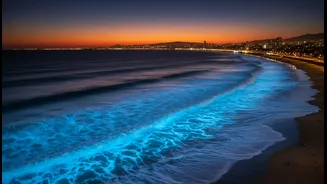
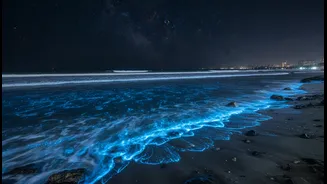
The ethereal glow is a natural phenomenon known as bioluminescence, which is the production of light by a living organism. The key player in Mumbai's glowing waters is a microscopic marine plankton called Noctiluca scintillans, commonly known as 'sea
sparkle'. These single-celled organisms produce light through a chemical reaction. Inside them, a light-emitting molecule called luciferin reacts with oxygen, catalysed by an enzyme called luciferase. When the water is disturbed by waves, boats, or even a hand splashing in the sea, it triggers a nerve impulse in the plankton, causing them to flash as a defence mechanism to startle predators. Millions of them flashing at once create the breathtaking spectacle of the 'blue tide'.
An Off-Season Spectacle
Typically, these bioluminescent blooms occur along India's west coast during the cooler, post-monsoon months of November and December. An appearance outside this window is considered unusual and prompts scientists to investigate the triggers. Several factors can contribute to an off-season bloom. These include sudden changes in water temperature, shifts in wind patterns, and an influx of nutrient-rich water. Events like unseasonal heavy rainfall can wash excess nutrients from agricultural runoff and sewage discharge into the sea. This process, known as eutrophication, can create the perfect conditions for a rapid multiplication of Noctiluca plankton.
A Beautiful Warning Sign?
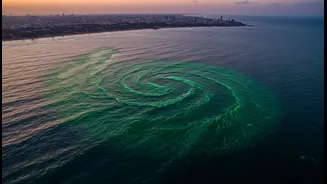
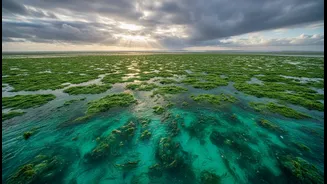
While visually stunning, a massive Noctiluca bloom is not necessarily a sign of a healthy marine ecosystem. Scientists increasingly view these events as indicators of environmental stress and climate change. Studies by organisations like the Indian National Centre for Ocean Information Services (INCOIS) have suggested a link between warming oceans and the increased frequency of these blooms. Warmer surface waters don't mix well with the cooler, nutrient-rich deep water, a condition that favours the survival of Noctiluca over diatoms, which are the foundation of the local marine food web.
The Ecological Impact
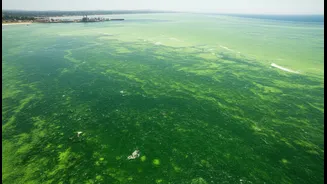
The proliferation of Noctiluca scintillans can have serious consequences for marine life. These organisms are voracious predators, feeding on other plankton like diatoms, as well as fish eggs and larvae. By outcompeting other organisms for food, they disrupt the base of the marine food chain. Furthermore, Noctiluca blooms are known to excrete large amounts of ammonia into the water. When the bloom dies and decomposes, the process consumes vast amounts of dissolved oxygen, creating hypoxic or 'dead zones' where fish cannot survive. This combination of ammonia toxicity and oxygen depletion can lead to mass fish die-offs, threatening the livelihoods of local fishing communities.
What Experts Conclude
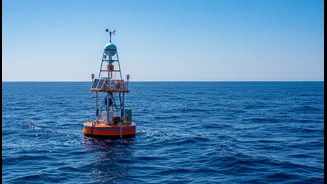
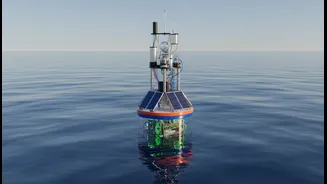
Marine biologists and oceanographers now largely agree that the increased frequency and intensity of these blooms in the Arabian Sea are a clear signal of a changing ocean. While earlier hypotheses pointed primarily to coastal pollution, recent comprehensive studies now strongly connect the phenomenon to broader climate change patterns. Warming sea surface temperatures are seen as a major culprit, creating an environment where Noctiluca can thrive and dominate. Researchers from institutions in India and abroad are using a combination of satellite imagery and direct water sampling to monitor these harmful algal blooms and better understand their long-term impact on regional fisheries and the overall health of the Arabian Sea.