


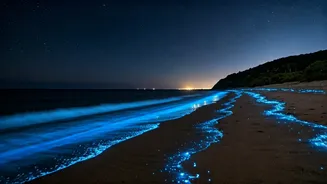



A Midnight Spectacle on the Coast
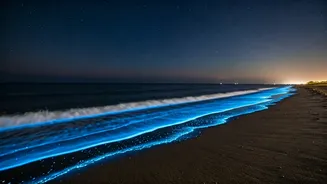
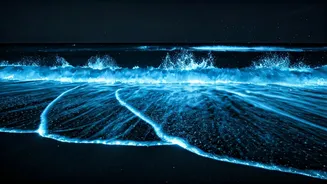
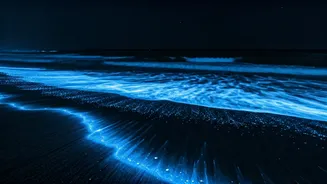
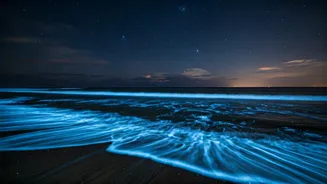
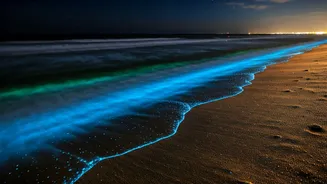
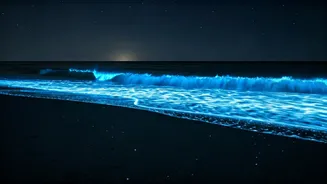
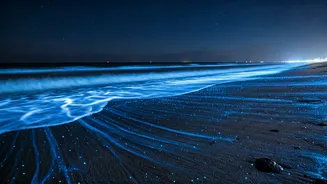
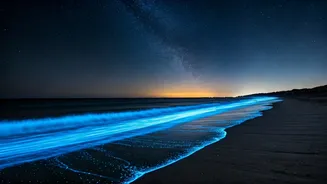
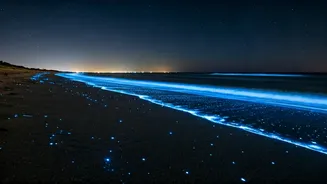
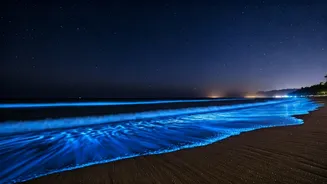
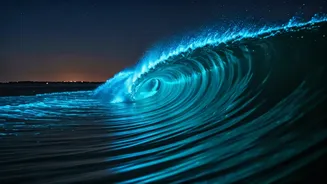
Along the shores of Karnataka, a state on India’s Arabian Sea coastline, something truly otherworldly has been happening. As night falls, the ocean begins to glow. Every wave that breaks, every footstep on the wet sand, and every splash in the water ignites
a brilliant, ghostly blue light that shimmers for a moment before vanishing. Videos and photos have flooded social media, showing the surf line illuminated as if by millions of tiny blue LEDs. For locals and tourists, it’s a mesmerizing spectacle. People are wading into the water, their movements creating radiant swirls around them, while others watch from the shore as the tide paints the coastline in dazzling, ephemeral strokes of light. The phenomenon has been particularly vivid at beaches near the city of Mangaluru, like Mattu and Padukere, turning these quiet coastal spots into must-see destinations for anyone chasing a bit of natural magic.
The Science of 'Sea Sparkle'
So, what’s causing this incredible light show? The answer isn't magic, but biology. The glow is a form of bioluminescence, the same process that makes fireflies light up. In this case, the culprit is a single-celled marine organism called *Noctiluca scintillans*. Often nicknamed “sea sparkle,” these plankton are dinoflagellates, a type of microscopic algae. They don't glow constantly. Instead, they flash their signature blue light as a defense mechanism when they are disturbed. The physical agitation from crashing waves, a moving boat, or even a swimmer’s kick triggers a chemical reaction inside the cell, producing what scientists call “cold light”—light generated with very little heat. When millions of these organisms are concentrated in the water, their collective flashing creates the stunning, large-scale effect that captivates onlookers. Think of it as a city of tiny, living alarm systems all going off at once.
Why Here? Why Now?
While bioluminescence can occur in oceans all over the world, these massive, vibrant blooms—often called “red tides” during the day for the murky color they can give the water—don't happen just anywhere. The conditions have to be just right. The bloom in Karnataka is often linked to a combination of factors. Favorable water temperatures and salinity create a comfortable environment for the *Noctiluca* to reproduce rapidly. More importantly, an abundance of food is key. These organisms feed on other plankton, like diatoms. Recent blooms have been connected to an increase in nutrients in the water, sometimes from agricultural runoff or sewage discharge flowing into the sea after monsoons. This influx of nutrients can trigger a chain reaction, leading to a population explosion of the plankton that *Noctiluca* eats, which in turn causes the *Noctiluca* population itself to boom.
A Beautiful Warning Sign?
As enchanting as the blue glow is, marine biologists view these massive blooms with a sense of caution. While *Noctiluca scintillans* itself is not toxic, its presence in such high concentrations can be a sign of an ecosystem under stress. These blooms can be disruptive to the marine food web. *Noctiluca* are voracious predators of diatoms, which are a fundamental food source for many fish larvae. By consuming them, *Noctiluca* can divert energy from the traditional food chain. Furthermore, when a massive bloom eventually dies, the decomposition process consumes huge amounts of oxygen in the water. This can lead to hypoxia—dangerously low oxygen levels—creating “dead zones” where fish and other marine life cannot survive, often resulting in large-scale fish kills. So, while the glowing waves offer a moment of wonder, they also serve as a beautiful but unsettling indicator of broader changes in the ocean's chemistry, potentially linked to pollution and climate change.