






Choosing an outdoor workout often comes down to personal preference, but what if your goal is consistent cardiovascular conditioning? We compare trail hiking and stand-up paddleboarding to see which offers a more reliable and predictable workout.
The Search for Consistent Cardio
When
it comes to building cardiovascular fitness, consistency is key. Achieving specific goals, like improving heart health or training for an event, often depends on exercising at a target heart rate for a sustained period. This is where the predictability of a workout becomes a major asset. An exercise that allows you to control and maintain a certain level of intensity makes it easier to follow a structured training plan and see measurable progress. While any outdoor activity is beneficial, some are more susceptible to external variables than others, turning a planned high-intensity session into a light recovery day, or vice versa.
Hiking: The Trail as Your Trainer
Trail hiking is a fantastic cardiovascular exercise that relies heavily on aerobic endurance—your body's ability to use oxygen efficiently over long periods. The intensity of a hike is highly controllable. Want to increase your heart rate? Find a steeper trail or increase your pace. Need to keep it in a lower-intensity zone for endurance training? Stick to flatter terrain. This ability to self-regulate is hiking’s greatest strength for predictable cardio. By choosing your trail, you essentially choose your workout intensity. Uphill sections act as natural interval training, demanding more from your heart and lungs, while a steady pace on a rolling path provides a reliable moderate-intensity workout. This makes hiking an ideal choice for anyone looking to execute a specific cardio plan, as the primary variables—terrain and pace—are largely within your control.
Paddleboarding: A Workout at the Mercy of the Elements
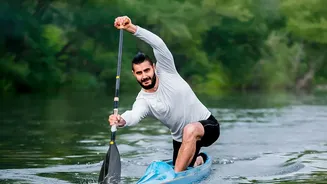
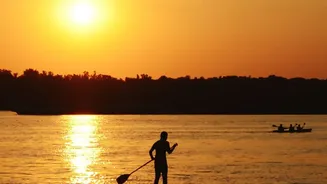
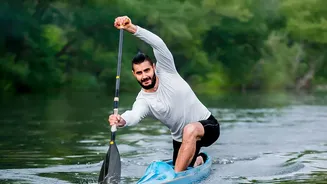
Stand-up paddleboarding (SUP) is a celebrated full-body workout that delivers excellent cardiovascular benefits. It engages the core for balance, the upper body for paddling, and the legs as stabilizers. However, its intensity is uniquely subject to environmental conditions, most notably the wind. Paddling on calm, glassy water can be a low- to moderate-intensity activity, perfect for a relaxing day. But when the wind picks up, the entire dynamic changes. Paddling into a headwind can transform a leisurely session into a grueling, high-intensity battle, sending your heart rate soaring as your body fights the resistance. Conversely, a strong tailwind can make paddling almost effortless, significantly reducing the cardio challenge. This variability makes it difficult to plan for a specific workout intensity. A session intended for steady-state cardio can become an exhausting high-effort struggle or a low-effort float, depending entirely on the day's weather.
Comparing Muscle Engagement and Calorie Burn
While both activities are effective, they work the body differently. Hiking is primarily a lower body workout, strengthening the glutes, quads, hamstrings, and calves, especially on varied terrain. Paddleboarding provides a more comprehensive, full body workout, with a particular emphasis on the core (abdominals, obliques, and lower back) for stability and the back, shoulders, and arms for paddling. Calorie burn for both is dependent on intensity, but general estimates show hiking burning between 400–600 calories per hour, depending on the trail's difficulty and pack weight. Recreational paddleboarding burns around 300–450 calories per hour, but this number can skyrocket to over 700 during intense paddling against wind or in a race. This wide range for paddleboarding again highlights its unpredictability; the effort level can swing dramatically based on conditions beyond your control.
Making the Right Choice for Your Goals
Deciding between trail hiking and paddleboarding depends on what you value most in a workout. If your priority is predictable, controllable cardiovascular conditioning where you can easily target specific heart rate zones and maintain consistent effort, trail hiking is the superior choice. Its reliability makes it ideal for structured fitness plans and steady progress. On the other hand, if you seek a full body workout that challenges your balance and core strength and you embrace the variety and unpredictability that nature offers, paddleboarding is an excellent option. It provides a unique and engaging experience, but you must be prepared for the workout's intensity to be dictated by the day's wind and water conditions. Ultimately, the best activity is the one you enjoy and will do consistently, but understanding their fundamental differences is key to aligning your workout with your fitness aspirations.