







A Trio of Worlds
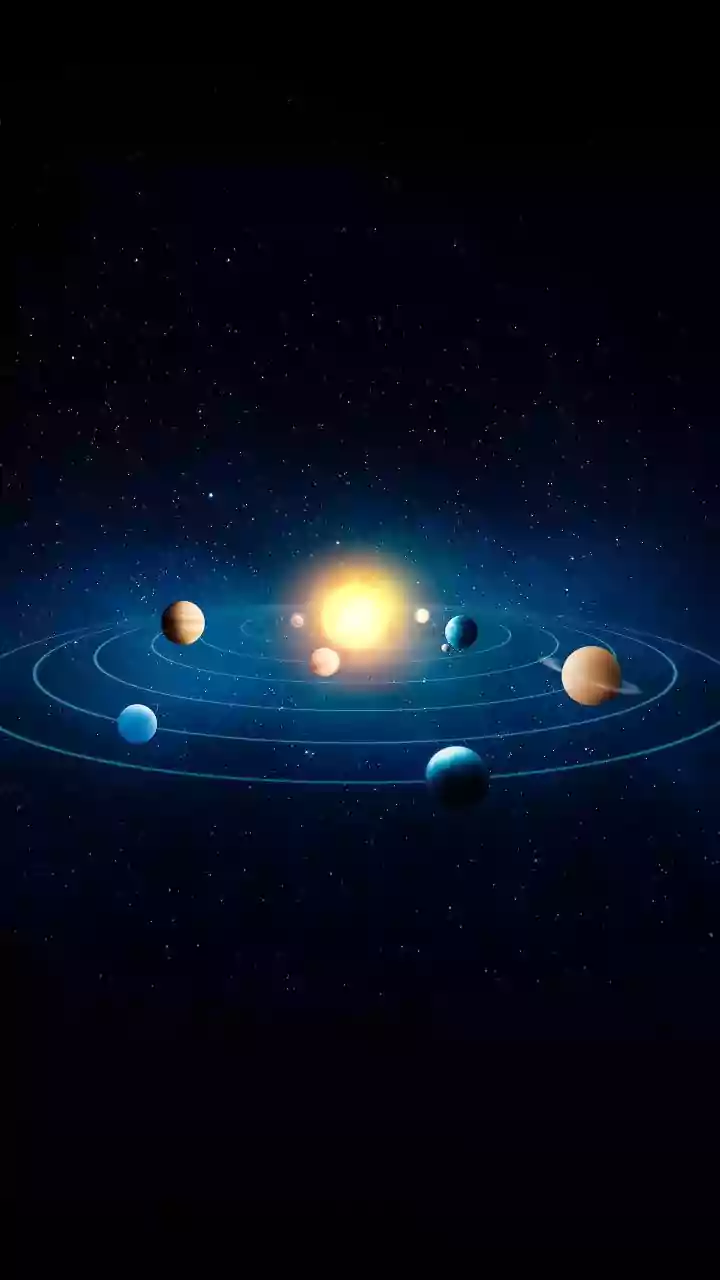
Our solar system is a dynamic place, with planets constantly moving in their orbits around the Sun. Occasionally, from our vantage point on Earth, these paths appear to intersect, bringing planets into close proximity in our night sky. This week, we are
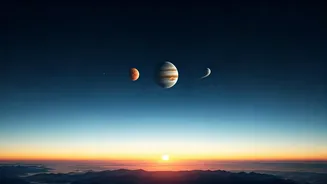
being treated to one such event: a 'triple alignment' of Mercury, Jupiter, and Saturn. Now, 'alignment' doesn't mean the planets will form a perfectly straight line in space—that's a common misconception and an astronomically near-impossible event. Rather, it means they will appear clustered together in a small patch of the sky. The gas giants Jupiter and Saturn, already popular targets for skywatchers, will be joined by the elusive innermost planet, Mercury, which is often difficult to spot due to its proximity to the Sun's glare. Seeing all three together is a delightful and uncommon sight.
When and Where to Look
Timing and location are everything for successful stargazing. To catch this planetary trio, you’ll need to look towards the western horizon. The best viewing window will be relatively short, starting about 30 to 45 minutes after sunset and lasting for roughly an hour. Any later, and the planets will have dipped below the horizon. For viewers in India, this means looking west from around 7:00 PM onwards, depending on your specific location. The sky will need to be dark enough for the planets to become visible, but not so late that they have already set. The bright beacon of Jupiter will be the easiest to spot first. Saturn will appear slightly fainter and nearby, while Mercury will be the lowest and closest to the horizon, presenting the biggest challenge.
No Telescope? No Problem.
The headline mentions telescope gear, and while a telescope will certainly enhance the view, it is by no means a requirement to enjoy this spectacle. In fact, this alignment offers a fantastic viewing experience for everyone, regardless of their equipment. With the naked eye, you will easily be able to see Jupiter as the brightest point of light in the trio, with Saturn appearing as a steady, yellowish dot close by. Mercury will be a fainter point of light, closer to the horizon. Even seeing these three distinct 'stars' so close together is a rewarding experience. A good pair of binoculars is the perfect middle ground. Binoculars will make Mercury significantly easier to spot and may even give you a glimpse of Jupiter's four largest moons—Io, Europa, Ganymede, and Callisto—appearing as tiny pinpricks of light flanking the planet. Of course, a telescope will reveal the most detail: Saturn's magnificent rings, Jupiter's atmospheric cloud bands, and the crescent phase of Mercury.
Tips for the Best View
To maximise your chances of a great viewing, a little preparation goes a long way. First, try to get away from bright city lights. Light pollution can wash out fainter objects like Mercury, making them impossible to see. A park, a rooftop, or a location on the outskirts of town will offer a much better view. Second, give your eyes time to adapt to the darkness. It takes about 15-20 minutes for human eyes to become fully dark-adapted. Avoid looking at your bright phone screen during this time. If you need a light, use a red torch, as red light is less damaging to your night vision. Smartphone apps like Stellarium, SkyView, or Star Walk can also be incredibly helpful. Simply point your phone at the sky, and the app will identify the planets and constellations for you.