




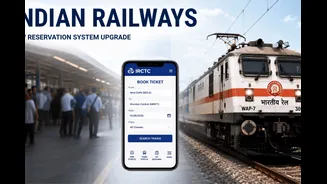


The Old Hassle Meets a New Solution
For decades, travelling with more than a single suitcase on Indian Railways meant a mandatory trip to the station’s luggage office. The process often involved uncertainty over costs, last-minute rushes, and the daunting task of navigating crowded platforms
with heavy bags. In a significant move towards passenger convenience, Indian Railways has introduced an online system that allows travellers to declare and pre-book their excess luggage from the comfort of their homes. Launched in mid-2026, this service is designed to bring transparency and efficiency to a traditionally cumbersome process. It empowers passengers by putting crucial information about luggage rules and charges at their fingertips before they even begin their journey, shifting the responsibility from a last-minute station task to a pre-travel checklist item.
First, Know Your Free Luggage Allowance
Before you can determine if you have excess luggage, it is essential to understand the free allowance permitted with your ticket. Indian Railways has a clear, class-based system for the amount of luggage you can carry without any extra charge. Knowing these limits is the first step to a hassle-free journey. AC First Class (1A): 70 kg First Class (FC) / AC 2-Tier (2A): 50 kg AC 3-Tier (3A) / AC Chair Car (CC): 40 kg Sleeper Class (SL): 40 kg * Second Class (2S): 35 kg These weights apply to personal luggage like trunks, suitcases, and bags that can be carried in the passenger compartment. It’s a generous allowance, but for those moving homes, returning from long trips, or carrying special equipment, exceeding these limits is common.
How the New Online Booking System Works
The new digital facility is available for passengers holding confirmed reserved tickets. The process is straightforward and begins at the official Indian Railways parcel website. Passengers need to visit www.parcel.indianrail.gov.in and enter their PNR number to fetch their journey details. The portal then allows you to declare the weight of your excess luggage. Based on the weight and distance of travel, the system calculates an estimated freight charge, giving you a clear idea of the cost involved. After submitting the details online, you must print the e-forwarding note. It is important to note that this is a pre-booking service; the final step still happens at the station. You need to present your luggage and the printout at the station’s luggage office at least 30 minutes before your train's departure for final weighing and payment. The receipt issued at the counter is required to collect your luggage at the destination.
Understanding the Charges and Penalties
Transparency in pricing is one of the biggest advantages of the new system. If your luggage is over the free allowance, the excess weight is charged at 1.5 times the standard luggage rate. The minimum charge for any excess luggage booking is a nominal ₹30. However, failing to declare your excess luggage can be a costly mistake. If a ticket checker discovers unbooked excess luggage during the journey, the passenger is liable to pay a penalty that is six times the standard luggage rate. This strict penalty serves as a strong incentive for passengers to use the new booking facility and comply with the rules, saving them from significant last-minute expenses and arguments.
Maximum Limits and Size Restrictions
While you can pay for extra weight, there is a maximum limit to what you can carry, even with payment. For instance, an AC First Class passenger can carry a maximum of 150 kg, while a Sleeper Class passenger can carry up to 80 kg. One crucial exception is for AC 3-Tier and AC Chair Car travellers. For these classes, the free allowance of 40 kg is also the maximum limit, and no excess luggage booking is permitted. Beyond weight, dimensions also matter. Standard suitcases should not exceed 100cm x 60cm x 25cm. For AC 3-Tier and Chair Car, the space is tighter, and the limit is 55cm x 45cm x 22.5cm. Any item larger than these dimensions must be booked for the separate luggage van.