



A Modern Look at a Cold War Fear
Scientists are revisiting a threat that seems pulled from the height of the Cold War: a nuclear bomb detonated in space. New research from physicists at the University of Wisconsin-Madison and Princeton University uses advanced computer modeling to simulate
what a single one-megaton nuclear explosion in low-Earth orbit would do to our sprawling satellite constellations. Unlike a ground-based explosion, the immediate blast isn't the main concern. The study explores a far more insidious and lasting danger that could cripple global infrastructure without ever touching the ground. The simulation is not just a theoretical exercise; it comes amid renewed concerns about the weaponization of space, including reports of nations developing anti-satellite nuclear capabilities.
Not the Blast, But the Belt
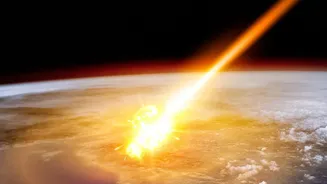
According to the simulation, the initial flash of X-rays from an orbital detonation would be a problem, but a limited one. It would instantly disable any satellites with a direct line of sight, accounting for perhaps 3% of the total fleet in low-Earth orbit. The truly catastrophic effect comes next. The explosion would release a massive cloud of high-energy electrons from fission products. These electrons would be captured by Earth's magnetic field, creating a deadly, artificial radiation belt that could linger for years. It's this persistent belt, not the momentary flash, that poses the gravest threat to everything we’ve placed in orbit.
A Cascade of Failure
Satellites in low-Earth orbit, where thousands of commercial and government assets reside, would repeatedly fly through this new radiation belt. With each pass, their sensitive electronics would absorb a cumulative dose of radiation. The simulation, which modeled over 13,000 active satellites, predicted a shockingly rapid wave of failures. Within a single day, a quarter of the fleet would be disabled. After three days, that number would jump to 78%. By the end of one week, approximately 98% of the satellites in low-Earth orbit would be rendered useless. Even 'radiation-hardened' military satellites would not be spared; the study found that simply tripling their radiation tolerance only delayed the inevitable by a few days, with nearly all still failing within a month.
A Sky Filled with Debris
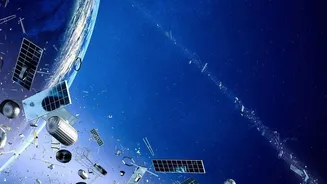
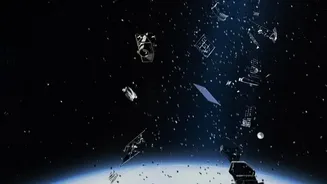
The problem wouldn't end with dead satellites. Once disabled, these thousands of objects would lose their ability to maneuver and avoid collisions. They would become uncontrolled space junk. The study projects that this would lead to about 20 collisions within the first two years alone, creating thousands of new, smaller fragments of debris. This would kick off a chain reaction known as the Kessler syndrome, where each collision increases the likelihood of further collisions, potentially rendering low-Earth orbit unusable for generations. Launching replacement satellites would be nearly impossible, as they too would have to fly through the same lethal radiation and navigate a treacherous field of high-speed debris.
Echoes of Starfish Prime
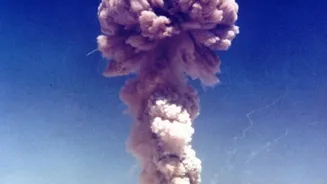
This terrifying scenario has a historical precedent. In 1962, the United States conducted the 'Starfish Prime' test, detonating a 1.4-megaton warhead 400 kilometers above the Pacific Ocean. The test unexpectedly created its own artificial radiation belt that fried the electronics of at least seven satellites, including the pioneering Telstar communications satellite, which failed months later. At the time, there were only a few dozen satellites in orbit. Today, there are tens of thousands. The new simulation shows that a similar event in our hyper-connected era would not be a minor disruption but a civilization-altering catastrophe, impacting everything from weather forecasting and financial services to military command and control.