





The Basic Appeal of Gold on EMI
Gold EMI schemes allow you to purchase jewellery immediately and pay for it over a period, typically ranging from a few months to a couple of years. Instead of a large one-time expense, you make smaller, regular payments. This is especially popular for significant
events like weddings, where large gold purchases are common. Jewellers, both online and offline, partner with banks or Non-Banking Financial Companies (NBFCs) to offer these plans, sometimes even marketing them as 'no-cost' EMI options. The convenience is undeniable, but it comes at a price that isn't always obvious from the monthly payment alone.
The First Big Add-On: Making Charges
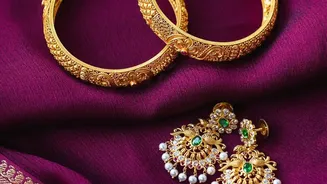
The price of gold jewellery is never just the price of the gold itself. A significant component is the 'making charge', which covers the cost of labour and craftsmanship to turn raw gold into an ornament. These charges can vary dramatically, ranging anywhere from 5% to over 25% of the gold's value, depending on the complexity of the design and whether it's handmade or machine-made. A simple machine-made chain will have lower making charges than an intricate, handcrafted necklace. It's a crucial cost component that is added to the principal amount your EMI is calculated on, and importantly, you don't recover this cost when you sell the jewellery later.
The Inescapable Cost: Goods and Services Tax (GST)
Every gold purchase in India attracts GST, and this is a multi-layered tax. You pay a 3% GST on the value of the gold itself. On top of that, a separate 5% GST is levied on the making charges. So, if you're buying a piece of jewellery, your total bill includes the price of gold, the making charges, 3% GST on the gold value, and 5% GST on the making charges. These taxes are part of the final price that gets converted into your EMI, inflating the total amount you repay over the tenure.
The 'No-Cost' EMI Illusion
Many jewellers offer 'no-cost' or 'zero-interest' EMI. While it sounds like you're only paying for the product, the interest cost is often bundled elsewhere. Retailers might forego a discount they would have offered on an upfront payment. For instance, an item might be available for a lower price with a full payment, but the no-cost EMI is calculated on the full, non-discounted price. Additionally, while the interest might be 'zero', banks often charge a non-refundable processing fee for setting up the EMI plan. You might also have to pay an 18% GST on the interest component, even if that interest is being subsidised by the retailer and isn't visible to you.
Other Potential Hidden Fees
Beyond the main costs, be mindful of other potential charges. Some EMI plans, particularly those from NBFCs, may include processing fees that can range from 0.5% to 2% of the loan amount. There could also be documentation or administrative charges. If you decide to pay off your EMI early, you might face a foreclosure penalty, although this is more common with personal loans than credit card EMIs. Always read the terms and conditions carefully to check for penalties on late payments, which can be steep and also negatively impact your credit score.
Are There Smarter Alternatives?
If your goal is to accumulate gold, especially as an investment, EMI on jewellery might not be the most efficient route due to the unrecoverable making charges and GST. Consider alternatives like Sovereign Gold Bonds (SGBs), which are issued by the RBI. SGBs offer a 2.5% annual interest on the investment amount and are tax-free on maturity if held for the full eight-year term. Another option is Digital Gold, which allows you to buy 24K gold in small amounts starting from just ₹1, without worrying about storage. While digital gold doesn't pay interest and has its own costs like a 3-5% spread between buy and sell prices, it avoids the high making charges of physical jewellery.