


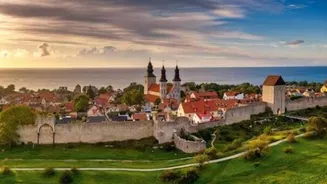
Visby: The Hanseatic Jewel of Gotland
Located on the island of Gotland, Visby is a UNESCO World Heritage site and arguably the best-preserved medieval commercial town in Northern Europe. Its most stunning feature is the 'Ringmuren', a 3.5-kilometer stone wall studded with defensive towers
that still encircles the old town. Built during the 13th century, this wall protected the wealthy Hanseatic League merchants who made Visby a crucial trading hub in the Baltic Sea. Walking its narrow, winding streets feels like stepping into a storybook, with over 200 preserved medieval buildings and numerous church ruins now draped in roses. Don't miss the 12th-century Powder Tower, the oldest part of the wall, or the ruins of St. Karin Church on the main square. Each August, the city hosts a Medieval Week, bringing its rich history to life with markets and jousting.
Sigtuna: Sweden's First and Oldest Town
Founded around 980 AD by King Erik the Victorious, Sigtuna holds the title of Sweden's very first town. Nestled on the shore of Lake Mälaren, its charming main street, Stora Gatan, is considered the country's oldest, following the same route it did over a thousand years ago. Sigtuna was the original capital and religious center before those roles shifted to Uppsala and Stockholm. The town is uniquely famous for having the world's highest concentration of runestones, ancient carved memorials from the Viking Age that tell stories of far-flung journeys and local families. You can also explore the evocative ruins of its early medieval stone churches, such as St. Peter's and St. Olof's, which fell into disuse after the Reformation. Its picturesque wooden houses and lakeside setting make it a peaceful retreat into Sweden's earliest history.
Lund: A Centre of Learning and Faith
Lund, located in the southern region of Skåne, is a vibrant city where ancient history and academic life merge seamlessly. Its heart is the magnificent Lund Cathedral, consecrated in 1145 and considered the finest example of Romanesque architecture in the Nordic countries. With its imposing twin towers, the cathedral has been a center of faith for nearly 900 years. Inside, you'll find a vast crypt with a forest of stone pillars, intricately carved 14th-century choir stalls, and a famous astronomical clock from around 1424 that comes to life twice a day. Though its university was officially founded in 1666, Lund's roots as an educational center date back to the medieval cathedral school. The combination of cobblestone streets, historic buildings, and the energy of one of Scandinavia's oldest universities gives Lund a unique and captivating atmosphere.
Ystad: Coastal Charm and Half-Timbered Houses
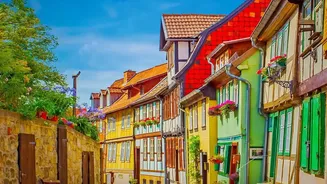
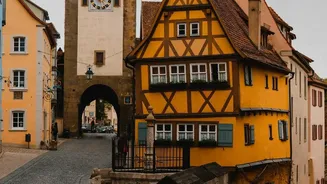
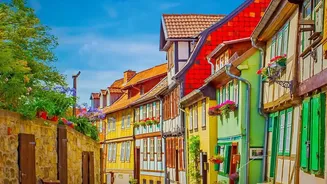
On Sweden's southern coast, the town of Ystad offers a different but equally enchanting medieval experience. It is famous for its hundreds of well-preserved pastel-coloured, half-timbered houses lining cobblestone streets, making it feel like a living museum. One of the oldest is Pilgrändshuset, which dates back to 1480. Key historical sites include the 13th-century Greyfriars Abbey, one of the best-preserved medieval monasteries in Sweden, and the massive St. Mary's Church (S:ta Maria Kyrka), which was first built around 1200. The town has a rich history as a trading and monastery town. For a unique tradition, listen for the Tornväktaren, or 'tower watchman', who blows a horn every 15 minutes through the night from the church tower to signal that all is well—a practice that continues to this day.
Vadstena: A Spiritual Haven on the Lake
Situated on the shores of Lake Vättern, Vadstena is a place of profound spiritual and historical importance. Its history is dominated by two major landmarks: the Abbey and the Castle. Vadstena Abbey was founded in the 14th century by Saint Bridget of Sweden, who established the Bridgettine Order here after receiving divine visions. The imposing abbey church, known as the 'Blue Church', became a major pilgrimage site. A short walk away is Vadstena Castle, a beautifully preserved Renaissance fortress built by King Gustav Vasa in 1545 to defend against southern attacks. The castle, with its moats and cannon towers, served as a royal palace until the 18th century. Together, the spiritual serenity of the abbey and the regal might of the castle make Vadstena a fascinating window into Sweden's religious and royal medieval past.