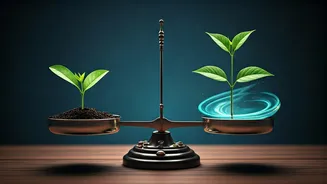










From Financial to Mental Capital
For generations, the idea of wealth was straightforward: it was about money, assets, and financial security. Ambition was measured by pay rises, promotions, and the accumulation of material goods. But a quiet revolution is redefining this outdated equation.
The new, and arguably more precious, form of capital is mental wealth. This isn't merely the absence of anxiety or depression; it is the presence of resilience, creativity, emotional regulation, and a sense of inner peace. It's the cognitive and emotional surplus you can draw upon to navigate life’s challenges, innovate at work, and cultivate meaningful relationships. While financial wealth can buy comfort, mental wealth provides clarity and contentment, something no amount of money can guarantee.
The Slow Death of Hustle Culture
The past decade was dominated by ‘hustle culture’—the glorification of excessive work and sleepless nights as markers of dedication and success. Being ‘so busy’ was a status symbol. In urban India, this translated into punishing commutes, 14-hour workdays, and the expectation of being perpetually available. The pandemic, however, served as a global reset button. Forced to slow down, millions began to question the sustainability of this lifestyle. Burnout, once a private struggle, became a public health conversation. We saw the rise of concepts like ‘quiet quitting,’ not as a sign of laziness, but as a boundary-setting rebellion against a work culture that demanded everything and gave back too little. The new status symbol is no longer boasting about how little you slept, but sharing that you logged off on time and enjoyed a quiet evening.
The Neurological Case for Doing Nothing
Our hyper-connected world conditions us to view empty time as wasted time—a void to be filled with scrolling, streaming, or another productive task. But neuroscience tells a different story. Unstructured free time, or even boredom, is not a bug in our system; it's a feature. When our minds are not focused on a specific goal-oriented task, a part of our brain called the Default Mode Network (DMN) activates. This network is crucial for processing experiences, self-reflection, consolidating memories, and sparking creative insights. It’s the mental space where our best ideas are born and where we solve problems that have stumped us during focused work. By constantly bombarding our brains with stimuli, we are effectively starving them of the very downtime they need to function optimally. Free time is not an absence of activity; it is the presence of possibility.
How Indian Ambition Is Changing
This global shift has a unique resonance in India. Many millennials and Gen Z professionals watched their parents sacrifice personal well-being and family time for career stability. While respecting that sacrifice, the younger generation is increasingly asking, “Is there another way?” They are redefining ambition to include work-life balance, mental peace, and personal growth. Success is no longer solely defined by a corner office or a fat paycheque, but by the autonomy to work remotely, the flexibility to pursue a hobby, and the freedom to spend quality time with loved ones. Companies that fail to recognise this shift are already losing the war for talent. The demand is clear: employees want to be trusted as adults who can deliver great work without sacrificing their entire lives to do so.
How to Build Your 'Time Portfolio'
So, how do you start ‘investing’ in this new form of wealth? It doesn’t require a dramatic life overhaul. It starts with a mindset shift: treating your free time with the same respect you treat your money. Start by scheduling ‘do nothing’ time into your calendar, just as you would a meeting. Protect your weekends by setting clear boundaries with work. Practice the art of the single task instead of perpetually multitasking. Take a walk without your phone. See these moments not as indulgences, but as essential deposits into your mental wealth account. The goal isn’t to be less productive, but to be more intentional. By reclaiming small pockets of time, you build the resilience and clarity needed to thrive in all other areas of your life.