


A Taste of Punjabi Heritage
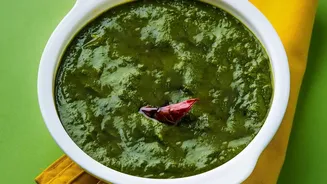
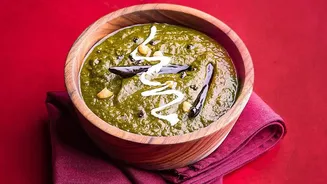
Sarson da Saag is the undisputed culinary crown of Punjabi agrarian culture. Originating from the fertile lands of Punjab, where mustard fields bloom in brilliant yellow during the winter, this dish was born from necessity. It provided a hearty and nutritious
meal for farmers to sustain them through long, cold days of physical labour. Today, it has transcended its humble origins to become a celebrated symbol of seasonal gastronomic wisdom, familial love, and hospitality, binding together royal kitchens and everyday households. Its arrival is eagerly awaited, and for many, it signals the true beginning of winter.
More Than Just Mustard Greens
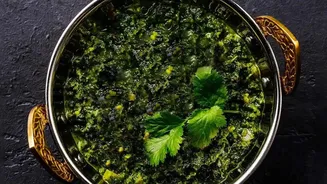
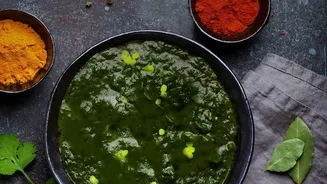
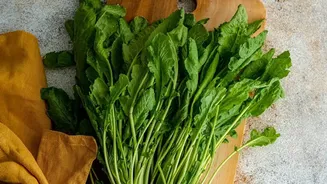
While 'sarson' (mustard) gives the dish its name and signature pungent, peppery flavour, authentic Saag is rarely made with mustard greens alone. To balance the slight bitterness of the sarson, a variety of other seasonal greens are added. The most common additions are spinach (palak), which adds a milder flavour, and bathua (chenopodium or goosefoot), which contributes to the creamy texture. Some recipes also include fenugreek (methi) or radish leaves (mooli ke patte) to create a more complex, layered flavour profile. This blend is not just for taste; it creates a nutritional powerhouse, combining the benefits of several different leafy greens.
The Slow-Cooked Secret
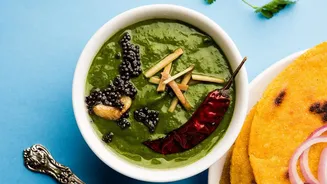
The magic of Sarson da Saag lies in its unhurried preparation. Traditionally, the mixed greens are slow-cooked for hours, often in an earthenware pot over a low fire, until they are incredibly tender. This long simmering process is crucial for developing its famously smooth, buttery consistency. Once cooked, the greens are mashed, historically with a wooden pestle called a 'ghotna'. To thicken the purée and enhance its creamy texture, maize flour (makki ka atta) is stirred in. The final step is a flavourful tempering, or 'tadka', of ghee, onions, ginger, garlic, and green chillies, which elevates the dish to another level.
A Nutrient-Rich Winter Warmer
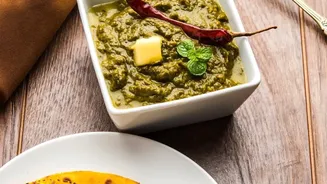
Beyond its comforting taste, Sarson da Saag is packed with health benefits perfectly suited for the winter season. According to Ayurveda, mustard greens have a warming effect on the body, helping to improve digestion and circulation. The dish is a rich source of essential nutrients, including iron, folate, and vitamins A, C, and K, which are vital for boosting immunity during the cold and flu season. The high fibre content supports gut health, while the addition of healthy fats like ghee or homemade white butter helps the body absorb fat-soluble vitamins.
The Perfect Pairing: Makki di Roti
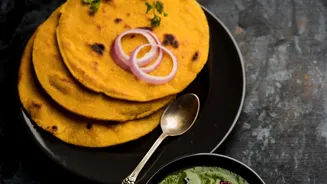
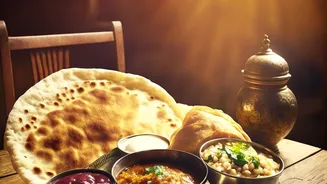
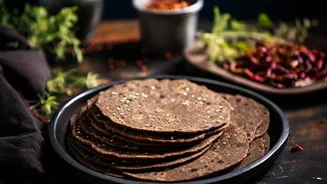
Sarson da Saag is traditionally served with Makki di Roti, a rustic flatbread made from maize flour. This pairing is iconic for a reason; the slightly sweet, earthy flavour and sturdy texture of the corn roti perfectly complement the creamy, spiced greens. The meal is often served with a generous dollop of white butter (makhan), a side of jaggery (gur), and perhaps some sliced onions or pickle. This combination creates a wholesome, balanced, and deeply satisfying meal that is a true celebration of winter's bounty.