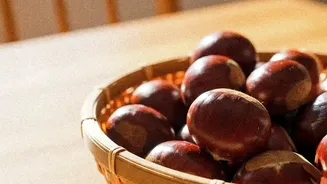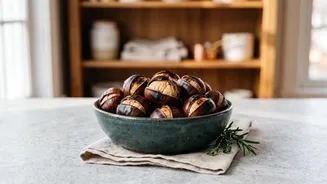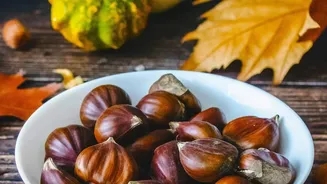

As the air turns crisp, the aroma of roasted chestnuts signals the arrival of winter. This seasonal favourite is more than just a warm snack; its sweet, earthy flavour and soft texture make it a versatile ingredient in the kitchen.
The Art of Roasting Chestnuts
Before you can cook
with chestnuts, you need to prepare them. Roasting is the most common method and brings out their best flavour. Start by preheating your oven to around 200°C. Using a sharp knife, carefully score an 'X' on the rounded side of each chestnut. This crucial step prevents them from exploding due to pressure build-up. Place the scored nuts on a baking sheet and roast for about 20-30 minutes. The shells will start to curl back, and the nut inside will become tender and golden. Once they're cool enough to handle, peel away both the hard outer shell and the thin inner skin, which can be slightly bitter. They are easiest to peel while still warm.
A Creamy, Comforting Soup
A velvety chestnut soup is the perfect antidote to a chilly evening. The concept is simple and relies on the nut's natural creaminess. To start, sauté aromatics like onions, celery, and garlic in butter or oil. Add your peeled, roasted chestnuts and cover with a good quality vegetable or chicken stock. Let everything simmer until the chestnuts are very soft, then carefully transfer the mixture to a blender and process until completely smooth. For extra richness, you can stir in a splash of cream or coconut milk at the end. Garnish with fresh herbs like thyme or chives for a truly elegant starter.
A Festive Stuffing or Side Dish
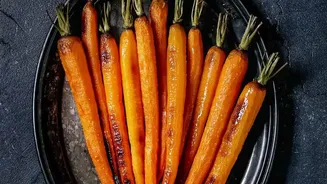
Chestnuts bring a delightful texture and sweetness to savoury side dishes, especially stuffings. For a classic stuffing, combine chopped roasted chestnuts with bread cubes, sautéed onions and celery, and a mix of herbs like sage, thyme, and rosemary. This mixture can be used to stuff poultry or vegetables like squash, or simply baked in a casserole dish until golden brown. Beyond stuffing, chopped chestnuts can be tossed with roasted vegetables like Brussels sprouts, carrots, and sweet potatoes during the last few minutes of cooking for an easy, festive side.
A Hearty and Rustic Pasta Dish
For a satisfying main course, chestnuts can be transformed into a rich and savoury pasta sauce. One popular approach involves creating a ragu by frying sausagemeat with chopped chestnuts until golden, then adding garlic, herbs, and passata to simmer into a thick sauce to be tossed with pappardelle or pasta shells. For a vegetarian option, create a creamy sauce by sautéing mushrooms and garlic, then adding chopped chestnuts and finishing with cream. You can even blend chestnuts with stock and herbs to create a smooth, cream-free sauce that coats the pasta beautifully.
A Simple Yet Elegant Dessert
The natural sweetness of chestnuts makes them a wonderful ingredient for desserts. One of the simplest ways to use them is by making a sweet chestnut purée or cream. Simply blend cooked chestnuts with a little sugar syrup, vanilla, and perhaps a touch of cocoa powder or cinnamon until smooth. This versatile cream can be used as a filling for cakes and pastries, layered in a trifle with whipped cream and biscuits, or simply served with yogurt. It also forms the base for decadent flourless chocolate chestnut cakes, where the purée provides a rich, fudgy texture.